The Little Mail Carriers have finally reached one of the most remote places on their Pacific adventure! After their travels through French Polynesia with postcrossers Maret (aka Cerres) and Andry (aka andry1961), it was time to leave the airplanes behind and board a ship bound for Pitcairn. The tiny island is famous for its connection to the mutiny on the Bounty, but getting there is an adventure in itself, especially when the Pacific Ocean decides not to cooperate!
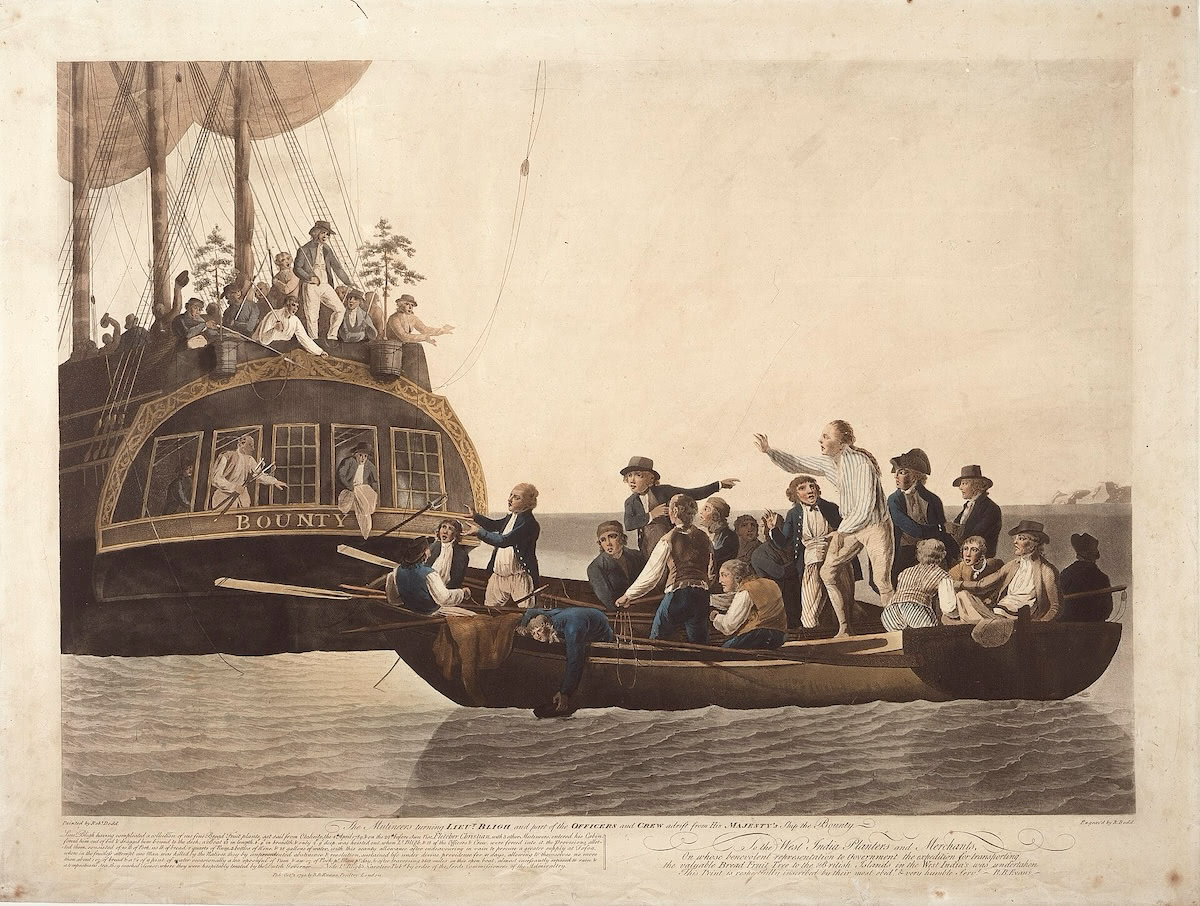
The history of Pitcairn is incredibly intriguing, and it’s closely connected to one of the most famous stories in maritime history: the mutiny on the Bounty. In 1789, the British ship HMS Bounty was returning from Tahiti when a group of sailors, led by Fletcher Christian, rebelled against their commander, William Bligh. They forced Bligh and 18 loyal crew members into a small open boat and set them adrift in the Pacific. Remarkably, Bligh managed to navigate the boat thousands of kilometres to safety!
Fletcher Christian and the mutineers set Lieutenant William Bligh and 18 others adrift, depicted in a 1790 aquatint by Robert Dodd (from Wikipedia).
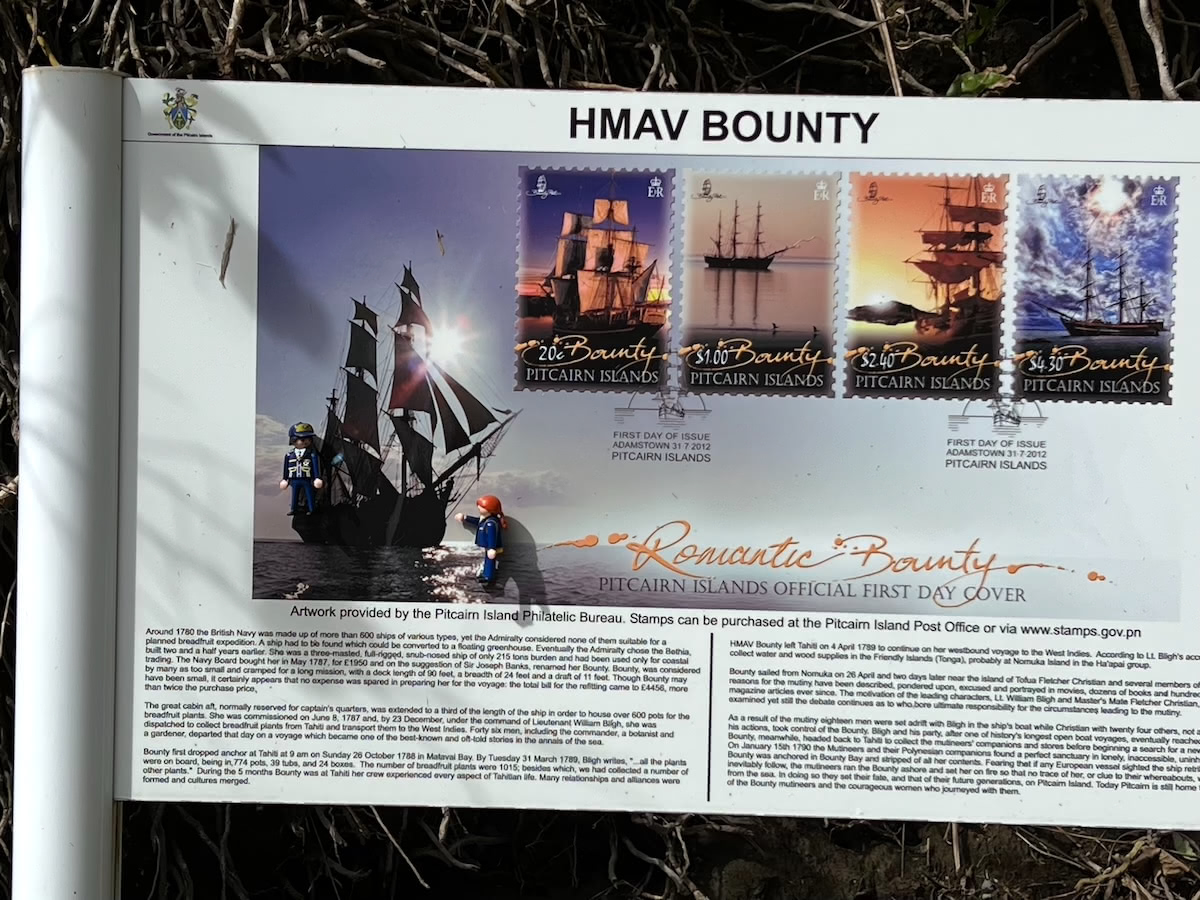
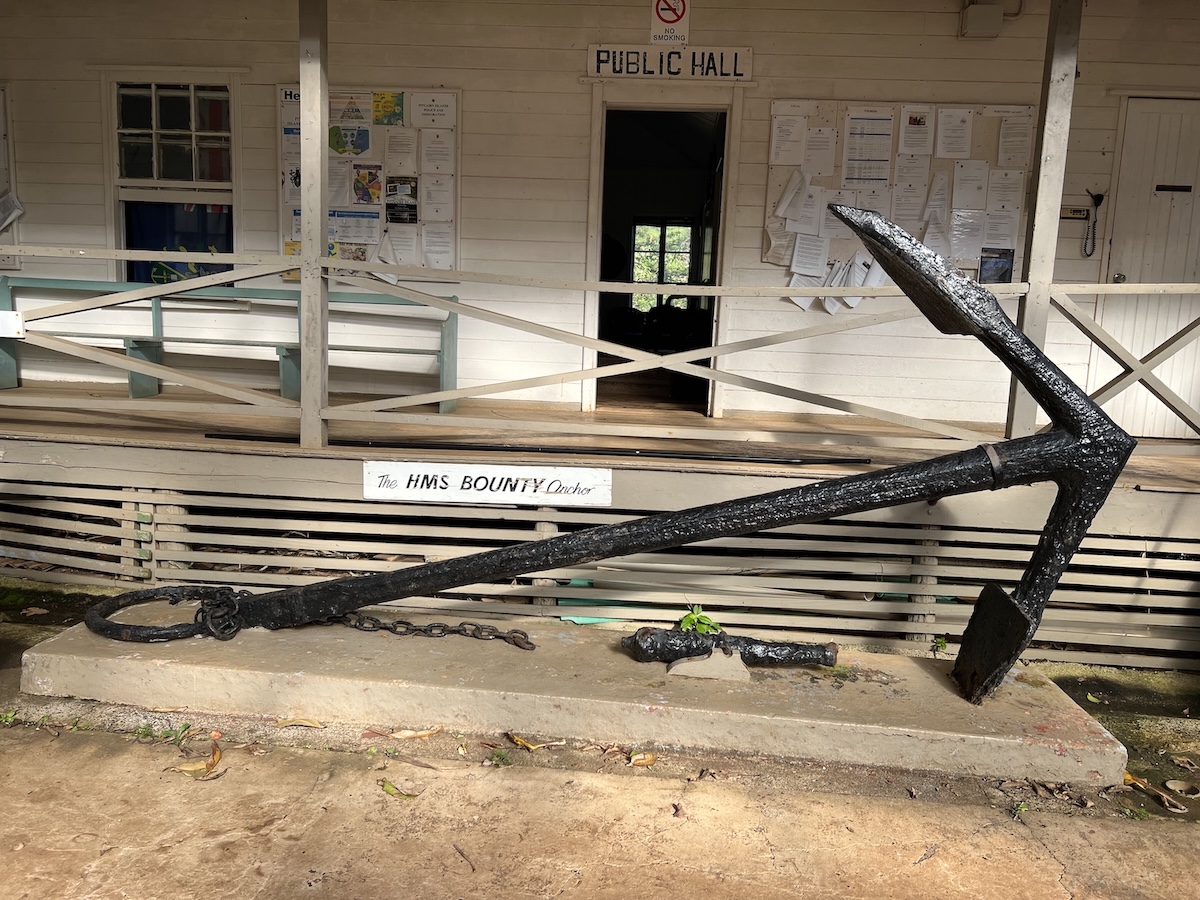
Meanwhile, the mutineers needed somewhere to hide from the British authorities. After some unsuccessful attempts to settle elsewhere, Christian and eight other mutineers, together with six Polynesian men, twelve women and a child, eventually reached Pitcairn in January 1790. The island was remote, difficult to reach and incorrectly marked on nautical charts, making it an ideal hiding place. After unloading their supplies, they burned the Bounty in what is now known as Bounty Bay, to prevent passing ships from discovering them. The settlement they established would eventually become the small community that lives on Pitcairn today, whose ancestry includes both the British mutineers and their Polynesian companions.
The story has inspired numerous books and films, including several adaptations of Mutiny on the Bounty. In 2017, a documentary even followed eight men attempting to recreate Captain Bligh’s extraordinary journey in a small boat. It’s quite something to think that we were about to visit the island where this famous story unfolded!
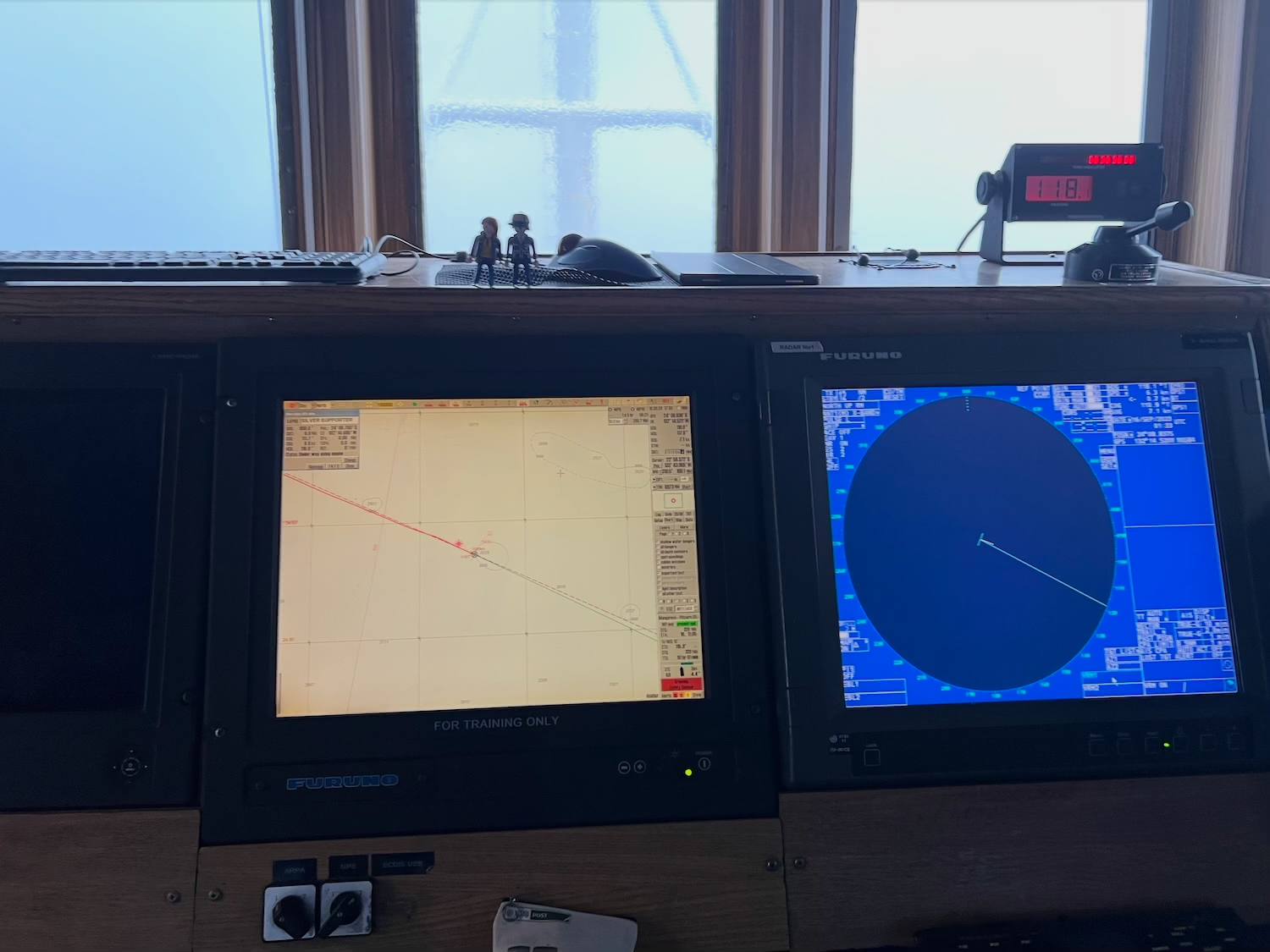
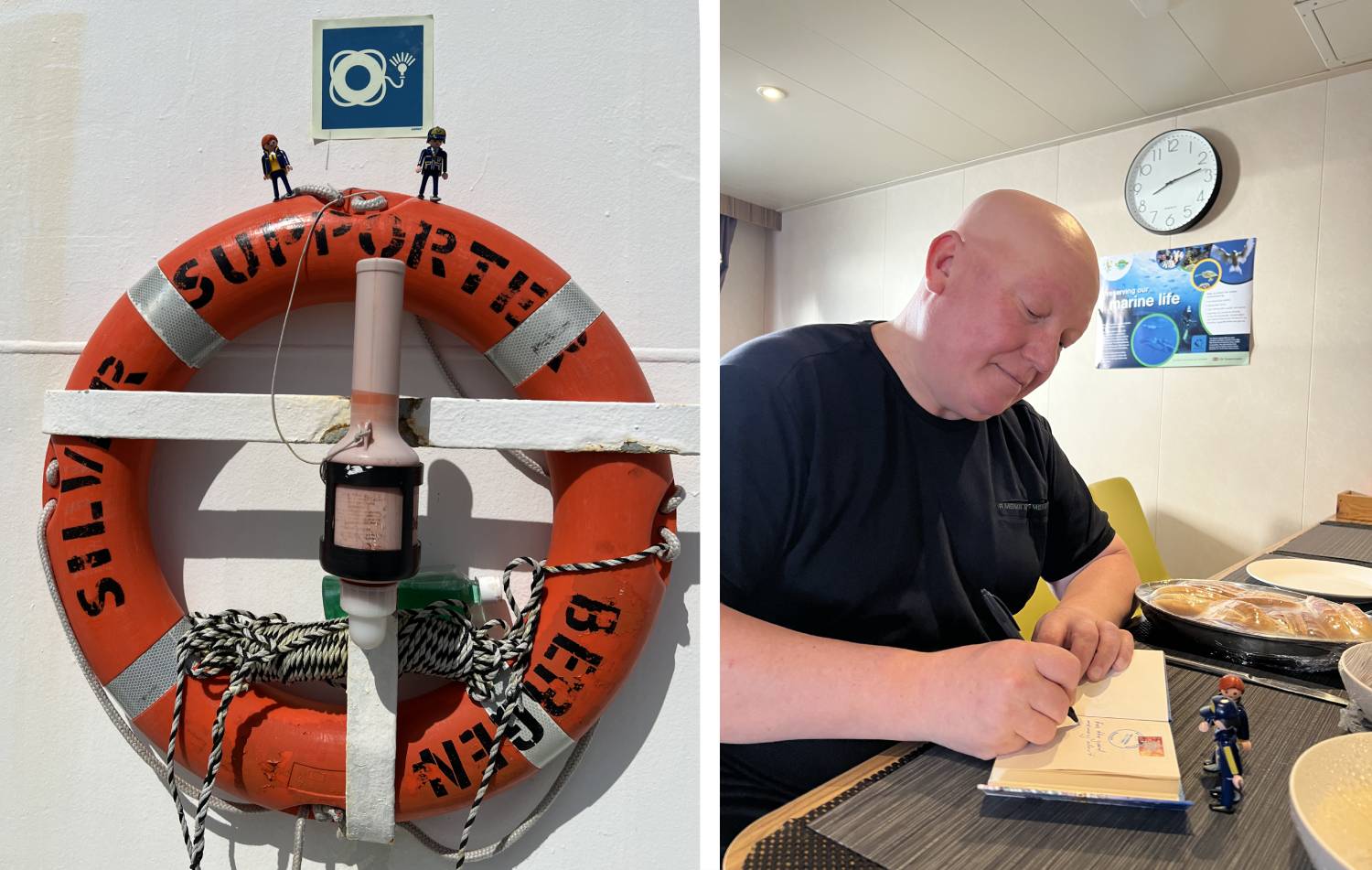
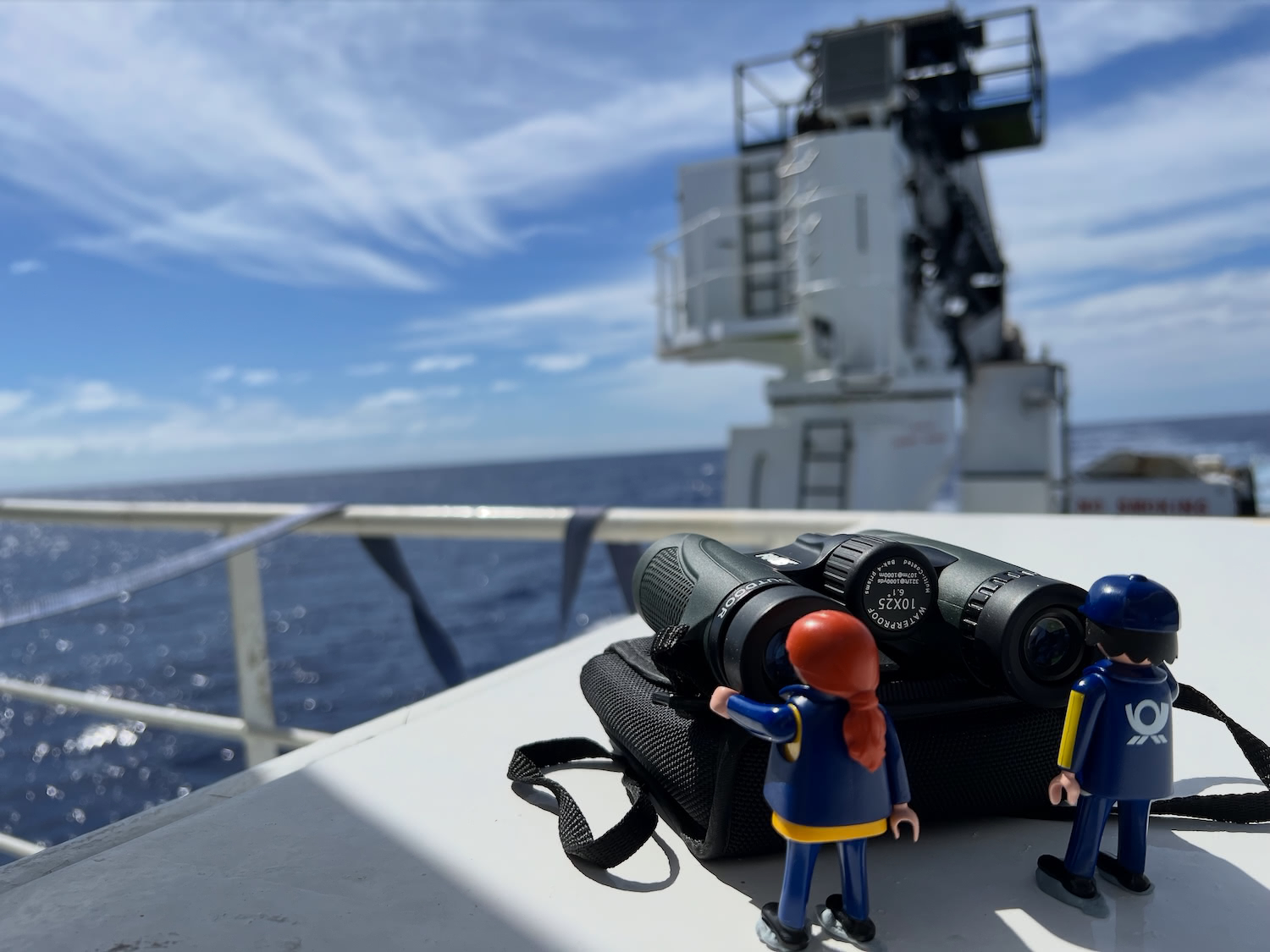
The vessel that sails between the nearest port, Mangareva (in French Polynesia), and Pitcairn is the Silver Supporter, a 51-meter-long ship under the Norwegian flag. It accommodates a maximum of 12 passengers and crew. In addition to us, there were scientists from England and New Zealand, and a new police chief with his wife.
The usual travel time on this route is about 32 hours. However, it soon became apparent that there was a storm and strong headwinds in these waters, unlike anything the senior officer, who had been sailing this route for five years, had ever witnessed in this part of the ocean.
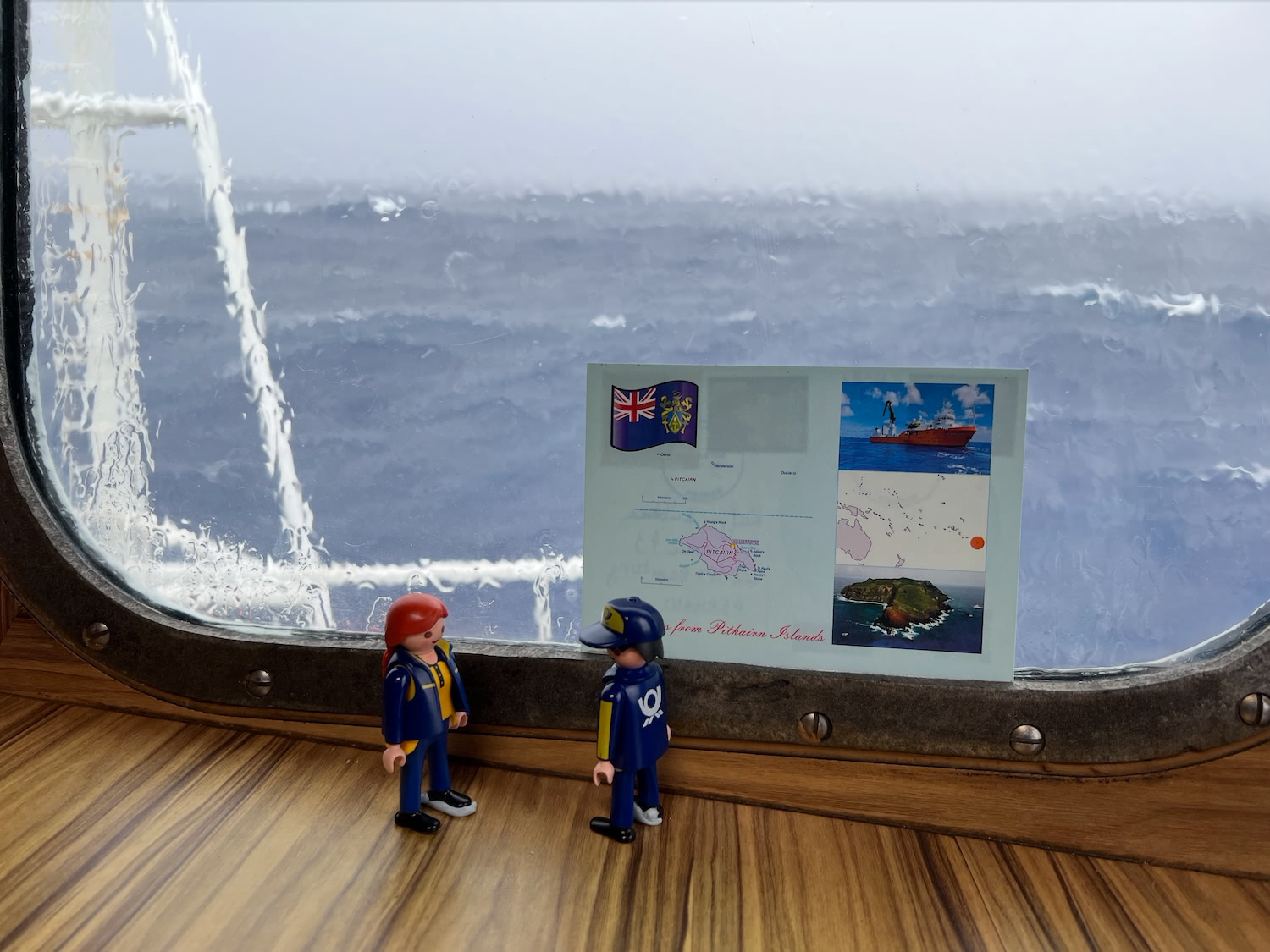
The wind really rocked and shook the ship, but we were in capable hands. We couldn’t help thinking about the Bounty, which was nearly the same length as our ship, and especially about Captain Bligh and his men, who had been set adrift in a boat only 7 meters long! Suddenly, our stormy crossing didn’t seem quite so bad…
As for us, we were immune to seasickness (though not all our fellow travellers were as fortunate), and we marvelled at the ship and the ocean during the voyage.
Our vessel also had a ship’s stamp. Since the ship sailed under the Norwegian flag and our travelling companions had brought Norwegian postage stamps, we were able to send some cards with Norwegian stamps and the ship’s stamp from the Pacific Ocean, adding the word “Paquebot”. Of course, we posted them from Pitcairn! This special postal arrangement applies to mail carried aboard ships and posted at a port of call.
Instead of the anticipated 32 hours, it was 48 hours into our journey when we finally spotted the island. Pitcairn Island is approximately 3.2 kilometres long and 1.6 kilometres wide. Unlike the previous islands we had visited, Pitcairn is not surrounded by coral reefs. At the time of our visit, there were fewer than 40 inhabitants!
The teacher and police officer came from New Zealand, while other roles were filled by locals. With no more children of school age living on the island, the school was no longer operating.
Since we only had a day and a half left from our planned three and a half days, we had to use our time wisely to see as much as possible. Thanks to local customs, this was made quite easy.
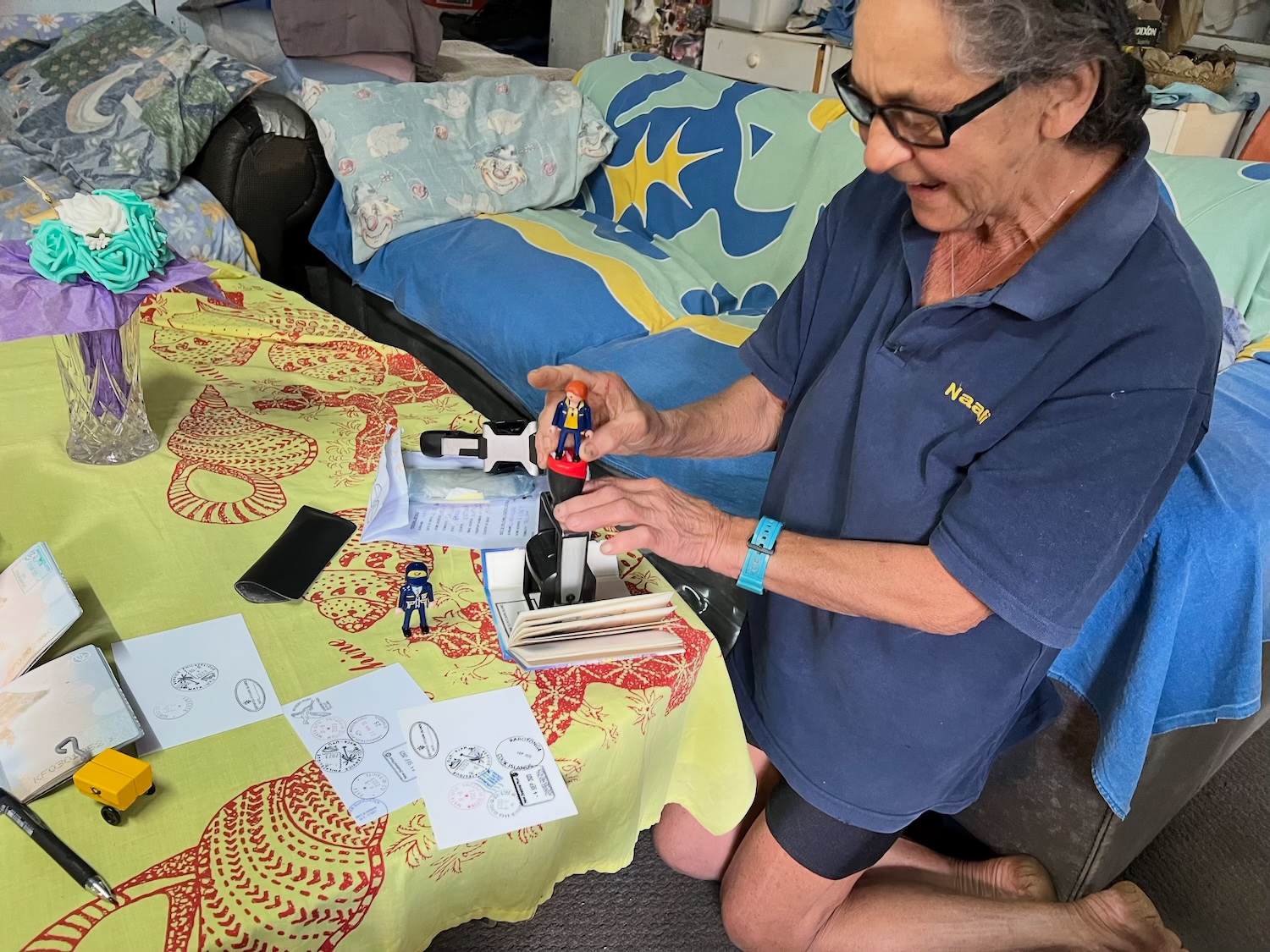
The island offers only homestays. We didn’t have to show our documents to the border guard at the port; instead, she came on an ATV to our accommodation! She sat on the floor, stamped our passports, and left welcome notes in our notebook too.
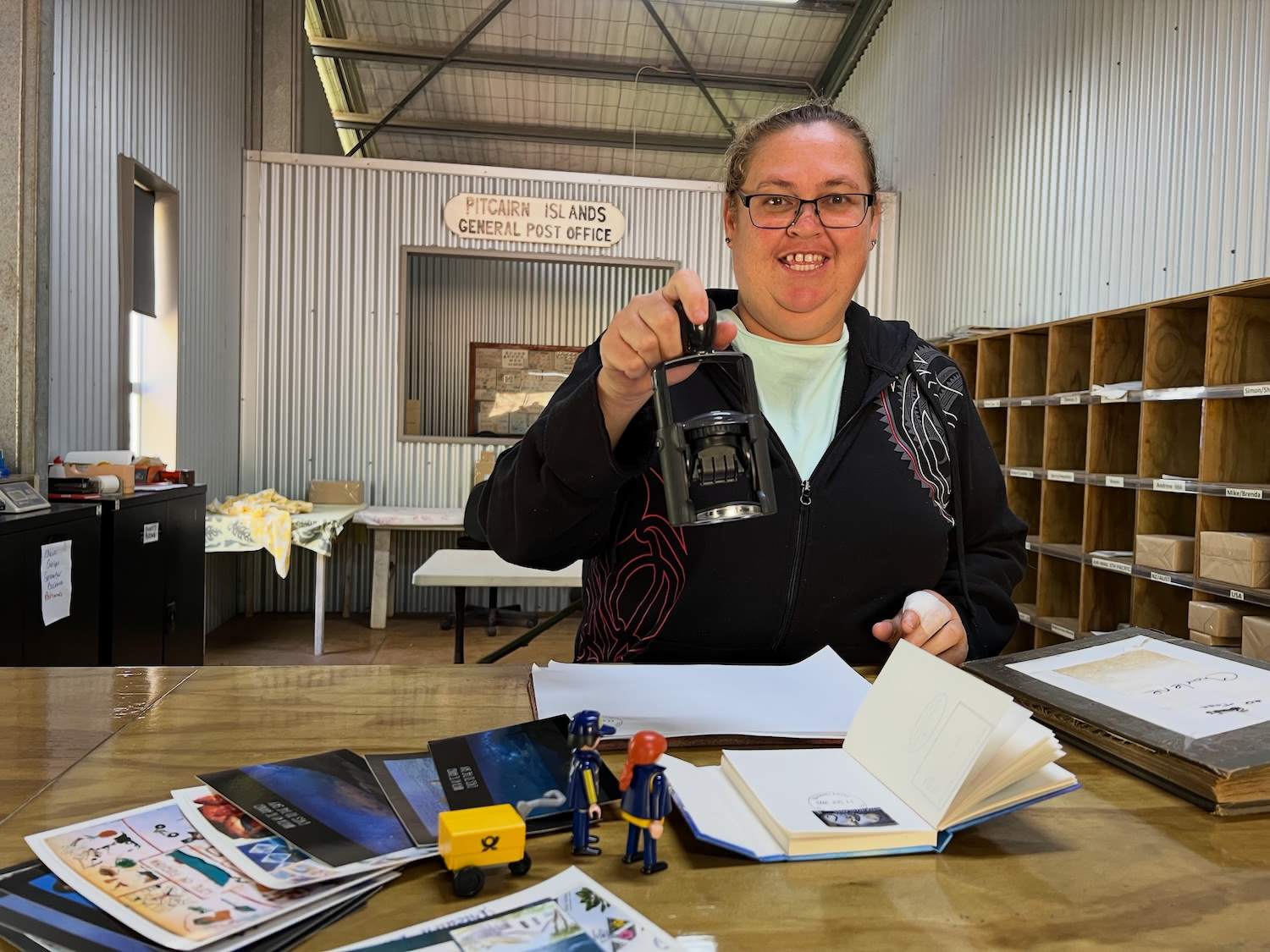
We visited the post office the following morning. For incoming mail, each family has its own shelf, and if someone receives mail (or there’s something else important to report), the walkie-talkie that stays on 24 hours a day starts making noise in every home.
Knowing that just a couple of hours would not be enough for our visit to the post office, Charlene, a post office employee, took the date stamp and came to our homestay. She was also our host’s daughter, and effectively transformed the living room into a pop-up post office!
The same ship we arrived on becomes a mail ship four times a year, transporting mail to and from New Zealand. The departure date was already set, so we knew our postcards would only start travelling five and a half weeks after we left the island. Patience is definitely part of sending postcards from Pitcairn!
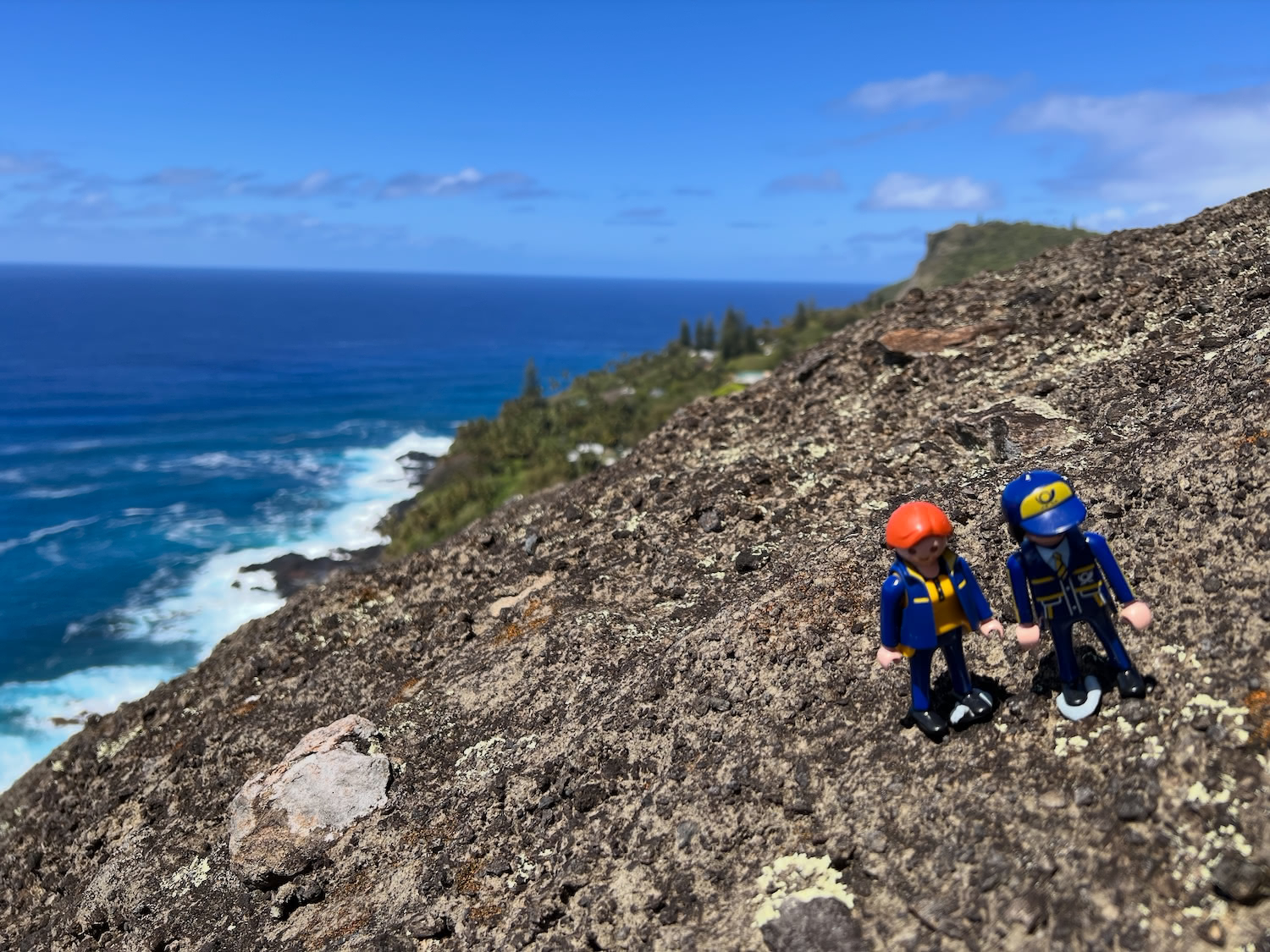
Having arrived in such a special place, we couldn’t just sit in our rooms. With the help of our host and the local police officer (whom we had already met on the ship), we managed to visit several important places: the museum, the church, the island’s highest point (Pawala Valley Ridge, at 347 metres), Christian’s Cave, and Bounty Bay. Seeing the places connected to the Bounty’s story made the history we’d been reading about feel much more real!
And then it was time to say goodbye. The entire village came to see us off once again. The same crew awaited us, but thankfully, the return journey was almost windless!
With that, our journey was nearly complete. We flew from Mangareva to Tahiti, and from there to New Zealand, then continued through Singapore and Istanbul before finally arriving back in Europe. Curiosity paid off this time!
And what an adventure it was! A huge thank you to Maret and Andry for taking the Little Mail Carriers along on this incredible journey across the Pacific, and to all the friendly postal workers and islanders who welcomed them along the way. We’ve loved discovering these faraway places through their photos and stories, especially all the little details of how mail works in such remote corners of the world. From tiny island post offices to living rooms transformed into postal counters… it was quite a trip!
Over in the forum, we have some fun topics for getting to know the community and getting to show off Postcrossing-related things, and today we’d love to highlight some of the posts in the What’s your writing desk like? topic! I’ve had a lot of fun scrolling through and checking out people’s setups, so I hope others find it interesting to take a peek as well!
To get us started, I figured I’d highlight Ana’s photo from the first post in the thread, as a bit of a throwback… especially as it’s kind of a funny story. First up, here’s the pic:
Ana says: “If you’re wondering why there is a mirror and water taps above the desk, well… it’s actually a bathroom that was turned into a craftsroom. The house we rented came with too many bathrooms, so we transformed one of them into a storage + writing desk. A much better use of space!”
It’s definitely unique, and a great way to use some space that otherwise wouldn’t get any love.
Danielle (IndoorOutdoorCat) has a desk much more like mine, set up in front of the PC with plenty of supplies situated around the keyboard (and a really cool looking desktop background!).
In a similar vein, Anja (Anjana) is all set up in the living room. She sounds very organised: “We do have an office, but my desk is in the living room. My desk in the office next to my husband’s was always full and had no space at all. When our daughter no longer wanted her desk, we put it in the living room and that’s where my space is now. On the left side, in the gray box, are the cards I have received, and behind it is my folder with unused cards. Next to it is my printer/scanner for scanning the cards and the thermal paper printer (which I use for cards in countries that are not so hot). On the other side, next to my monitor, is my little wall for my newest favorites with a desk organizer. Next to it are two small drawer cabinets. That’s where I keep washi tape, stamps, and other things.”
For something a bit more unplugged, Sandra (Pixie10) shared a photo of her writing desk, with a cheery star hanging in the window and a minimalist, organised look I have to envy…
When it comes to a beautifully organised writing space with everything you need, I think Anna (Siberianamerican) has really got it (washi)taped, though! It’s a space for crafting and writing and it looks perfect to me.
Samantha (Sjwiley) also has a very cosy space, a little nook she was very excited about when moving into the house. When she posted to share, she said: “When we moved in I knew immediately what I wanted to do with this alcove: reading and writing. I haven’t got all my things arranged yet but the chair with the stand and writing desk is ready.”
In a tale immediately familiar to many cat owners, Celestine (celestinejoy) challenged others to upload a photo of their desk right away… and posted this:
With my own rabbits, I frequently get “snoopervised” when I’m trying to do something, but they’re more likely to get into my lap than onto the actual desk!
Madeleine (poissonrouge) originally shared a lovely fir wood writing desk setup, and later shared an update with a cat of her own… in this case, a painting found while thrifting, though!
All of this really makes me want to jazz my own space up a bit: it’s really plain, because I think best when there isn’t a lot of clutter… but surely I could make it a bit prettier so it’ll be worth sharing sometime…
These are just some highlights from my browsing in the forum, so don’t forget you can also check out way more writing desk setups over on the forum! This was just a collection of mostly recent posts we got everyone’s kind permission to re-share. Maybe you’ll be inspired to go and share your own?
The ravioli have been eaten, the stamp-shaped cookies are long gone, and the surfaces of our desks and dining tables are finally visible again, now that all the postcards have been mailed… So it’s time for a little World Postcard Day recap!
As usual, October 1st started somewhere on the other side of the world, while many of us were still very much on September 30th, and then slooooowly rolled across the timezones. The forum topic was such fun to follow throughout the day — lots of postcard piles, messy desks, trips to mailboxes and post offices, meetup photos, special stamps and, naturally, a suspicious amount of food shaped like postage stamps!
People wrote postcards pretty much everywhere. On trains, during lunch breaks, while traveling, at work… and even on top of a mountain! Julia1506 wrote her five cards from Mount Pilatus in Switzerland while watching alpine ibexes outside the window. And there was even a mailbox up there to send them from, whoa!
There were also lots of small stories that made us happy! Postcrosser reiselustig was walking to the mailbox with a pile of postcards when she passed a garbage truck. One of the workers jokingly asked whether all that mail was for him… so, on the way back, she got his address and decided to send him one too. So cool!
The Postcard Lounge was back as well, open for 16 hours so that people all around the world could drop in and write postcards together. It’s strangely comforting to sit quietly with a bunch of strangers on the internet while everybody scribbles away at their own desks!
There were some familiar faces there, some new ones and even a few younger postcard writers, which made us extra happy. And some people took the postcard writing very seriously, like tornadogrrl, who wrote 72 postcards and her pen ran out of ink while she was signing the very last one, about a minute before the Lounge closed. 😱
One thing we were especially happy about this year was seeing so many events outside the usual Postcrossing meetups! Back in August, I asked everyone to poke their local library and suggest celebrating World Postcard Day — and some of you really did it! By September 28th, we already had around 25 library events listed on the World Postcard Day calendar, and a few more appeared after that.
Libraries organized postcard-writing tables, coloring activities and little workshops, and there were also activities in schools, museums and other community spaces. This year’s coloring version of the official postcard turned out to be especially handy for some of these events.
And the celebrations didn’t all happen exactly on October 1st either. At a school in Feuchtwangen, Germany, a class of 12 and 13-year-olds celebrated by drawing each other’s names and writing surprise postcards to their classmates. The idea was simply to make a connection and give someone a little bit of joy, which feels like a beautiful interpretation of this year’s “Paper Bridges” theme.
There was plenty happening on the philatelic side too! Several postal operators prepared special World Postcard Day postmarks, and this year we got something particularly exciting from Serbia: a Postcrossing / World Postcard Day postage stamp! 🎉 Pošta Srbije issued the stamp on October 1st, together with a first-day cover and special cancellation. This is the first World Postcard Day-themed stamp out there, which is wild, when you think the event only started 7 years ago!
Meanwhile, Postcrossing itself was having a rather busy day! This year we lowered the World Postcard Day limit to five addresses per person, which thankfully made things much calmer behind the scenes while still leaving plenty of postcards flying around.
A total of 99,803 postcards were requested on October 1st (in all timezones + UTC), and of course that doesn’t include all the extra postcards people sent to friends, family, penpals, coworkers, neighbors, postal workers… or random garbage collectors. By the way, thank you for being understanding about the new limit. From our side, things went much more smoothly this year, and we hope that meant everyone could spend a little less time fighting with the website and a little more time actually writing postcards. 😊
And last but not least, it’s World Post Day today!
October 9th celebrates the anniversary of the founding of the Universal Postal Union in 1874, which is basically the enormous international postal network that makes all these little paper journeys possible in the first place.
This year’s World Post Day theme is “One postal network, infinite possibilities”, which feels rather appropriate after a week spent talking about Paper Bridges. Every postcard we sent on October 1st depends on postal workers, post offices, sorting centers, planes, trains, vans, bikes and mailboxes somewhere along the way.
So today, a big thank you to all the postal workers who keep our postcards moving — and to all of you who gave them so much extra mail to carry last week. 😅❤️
Happy World Post Day!
When you think about it, postcards are a terrible piece of technology.
There’s no encryption, and no undo button. No read receipts. They’re fragile and can easily get lost or damaged (a bit of rain and you can’t even read them anymore)! They require you to find stamps and walk or drive to your nearest postbox in order to get them sent. And you don’t know when they’re going to be delivered: anything between 3 days and 3 months is possible!
And yet… somehow, 157 years later, millions of people still think they are just brilliant — us included! 😍 They’re surprising, colorful, thoughtful, carry a heartfelt message and cute stamps, and just make us want to hug the sender for thinking of us. October 1st is World Postcard Day — the day we celebrate this terribly brilliant invention!
By now, World Postcard Day is already underway in a lot of countries around the world. People are meeting up, libraries and museums are joining in, and plenty of postcards are being dropped in postboxes today. Some will travel across town, some across oceans, and some will probably take the scenic route to their destination… 🤪
And there’s a little extra stamp-shaped celebration too: Pošta Srbije is releasing a Postcrossing/World Postcard Day-themed stamp today (yes, it’s a 2-in-1)! It features a classical Serbian mailbox… and in case you were wondering, they really look like a bearded grandpa!
The stamp, FDCs and special commemorative cancellation mark will be available in post offices and their online shop, from today onwards. Hurray! We’re very happy to see one new country enter the “Postcrossing stamp club” — and also to see World Postcard Day featured on a postage stamp!
Wherever you are celebrating, check out if there’s a meetup near you, and perhaps you’ll be part of one of those tables covered in postcards, pens and stamps. And if not, you can always join us in the Postcard Lounge and celebrate there with everyone else. World Postcard Day doesn’t really need to be complicated! Just a postcard, a stamp, a pen, and most importantly, your time and care.
I think that’s why postcards are still so beloved in this day and age of digital “instantaneousness” — because you know the person on the other side was thinking about you, and gave you a bit of their precious time. As Uncle Alex used to say, “If this isn’t nice, I don’t know what is”.
And last but not least, we have an extra challenge for you all today: send at least one postcard to someone who isn’t expecting one! Maybe someone you haven’t written to in a long time, or simply someone who would smile at finding your handwriting in their mailbox. It doesn’t need to be clever or beautifully composed — a small surprise is enough. Let us know in the comments who you’ll be writing to.
We hope you spend your day surrounded by happy mail, and indulge in some stamp-shaped deliciousness — like ravioli or stamp cookies!
Here’s to slow mail and this wonderfully inefficient little invention! ❤️
Is everyone ready for the postcardiest day of the year? We hope so, because World Postcard Day is just one week away! 😱
Yes, yes, we know: we already wrote the big World Postcard Day FAQ earlier this month. But talking about limits and slots is one thing… remembering to buy stamps, sign up for meetups and stock the kitchen with delicious stamp-shaped food is another. So, with one week to go, here’s your final World Postcard Day checklist!
Make sure you have enough postcards ready to go, because World Postcard Day has a sneaky way of making people write “just one more". Any postcard is a WPD card if sent on October 1st, but if you’d like some extra special ones, you can download and print the official postcard from the World Postcard Day website.
Also, make sure your favourite pens are writing smoothly. Now is the time to refill your fancy fountain pen with waterproof ink!
This year’s official postcard also has an outline version, which is perfect for children, schools, libraries, museums… or adults who need a good excuse to take out the colored pencils!
October 1st is not the day to discover you only have one stamp left… 😅
If you’d like to receive the World Postcard Day badge, you’ll need to request and send at least one official Postcrossing postcard on October 1st. The badge will appear once that postcard is registered. Remember: this year, you can send up to 5 postcards on October 1st, as long as you have enough available slots (no extra slots are added for the day).
World Postcard Day is bigger than Postcrossing! Send a card to a friend, a family member, a neighbor, a teacher, a librarian, your local fire station, a nursing home, or someone you simply want to thank. Think of other people who might not have received a postcard in a long time, and could probably use a little extra cheer! Now is the time to make sure you have everyone’s address.
There are meetups, library activities, museum events, postcard workshops and other celebrations happening around the world. And if you’re a geocacher, don’t forget: attending a Geocaching event next week will earn you the World Postcard Day souvenir on your Geocaching account! Take a look and see if something is happening near you — or organize a tiny celebration of your own.
We’ll have the online Postcard Lounge open again, so you can write postcards in quiet, cozy company with other postcrossers around the world. Bring postcards, stamps, a pen, and your beverage of choice.
As tradition dictates, the official World Postcard Day menu is “things that resemble postage stamps”. We recommend ravioli for the main course (or sandwiches cut into stamp shapes), and stamp-shaped cookies for dessert… but we’re happy to see your gourmet creations!
We want to see your writing desks, postcard piles, stamps, mailboxes, meetup tables, library events, colouring activities, stamp-shaped food and general happy mess. Please share them on the forum topic… especially if your table looks like a tiny postal tornado passed through it! 🌪️
And that’s it! Gather your cards, check your stamps, shop for the right foods and get ready to send some paper bridges into the world.
We can’t wait to celebrate World Postcard Day with you on October 1st!

.jpg "More postcards from Pitcairn")
.jpg "More postcards from Pitcairn")


