There are quite a few things that postcards are good at: making people smile, showing us places far away, and occasionally making us check our mailboxes a little too impatiently! 😅 But every December, postcards sent from Germany get to do something extra special: they help support literacy!
That’s right, it’s time for our annual Cards for Literacy campaign with Deutsche Post! This is the 14th year of our partnership, and we’re very happy to be joining forces once again to support Stiftung Lesen (Reading Foundation), a German non-profit organization that helps people discover the joy of reading and develop their literacy skills. Here’s how it works:
For every official Postcrossing postcard sent from Germany during December, Deutsche Post will donate €0.10 to Stiftung Lesen, up to a total of €10,000.
To be counted, postcards need to be sent in December 2026 and registered until February 28, 2027.
Last year, postcrossers in Germany sent an amazing 111,561 postcards during the campaign, and Deutsche Post donated €10,000 to Stiftung Lesen. That’s a lot of happy mail traveling around the world, while also supporting a very worthwhile cause!
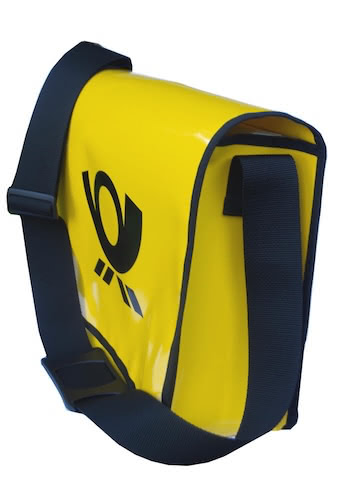
And because a little extra motivation never hurts, Deutsche Post has prizes for three lucky postcrossers in Germany taking part this year: three bright yellow messenger bags in the unmistakable Deutsche Post design! They’re just the thing for carrying your very important postcards on your next trip to the mailbox (and there might even be a bit of space for an extra thing or two).
Everyone who sends at least one official postcard from Germany during the campaign will be entered into the prize draw, and the more postcards you send, the more chances you’ll have of winning one of the bags. The prizes can only be shipped to addresses in Germany. As usual, Paulo will let his trusty random number generator pick the three lucky winners in March 2027!
And what if you’re not in Germany? You can still help! When you receive a postcard from Germany, try to register it promptly. Every registered postcard frees up a slot for its sender, allowing them to request another address and keep the postcards moving. It’s a small thing, but it makes a difference, especially during December.
There’s a reason we’re so fond of this yearly tradition: reading and writing are skills that many of us take for granted, but not everyone has the same opportunities to develop them. Stiftung Lesen works with families, schools, libraries, volunteers and community organizations to help more people gain confidence with reading and discover what books have to offer!
So, German postcrossers: time to check your postcards and stamps, make room for a few more traveling postcards and get those pens ready! And to everyone else, thank you in advance for helping those postcards reach the finish line. Here’s to another December full of happy mail and a little extra good in the world! 🥰
P.S. Postcrossing respects your privacy and will not share your personal information with Deutsche Post without your permission. You can read the full campaign conditions (in German).
When the Olympics were hosted in the UK, there was a special initiative to paint the traditional red post boxes gold in the hometowns of Britain’s gold medal winners. Some years on, Dawn (DJMinNL) has written us a guest post about how that all turned out! Without further ado, over to Dawn.
Red post boxes are one of the UK’s most recognisable sights. The first pillar boxes appeared in 1853. Originally green, from 1874, they were painted bright red to make them easier to spot. Fast forward to 2012, and something unusual happened—some of them turned gold.
The change came during the London 2012 Summer Olympics (27 July to 12 August). To celebrate Team GB's success, Royal Mail launched a nationwide tribute: every gold medal winner would have a post box in their hometown painted gold for six months. As an extra touch, a commemorative stamp was released for each winner—remarkably, available the very next day.
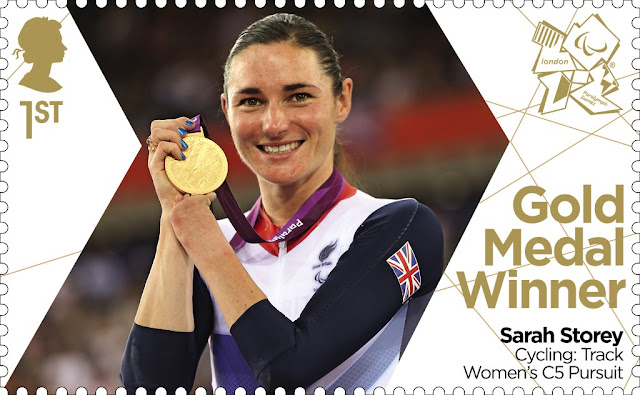
The first Paralympic Gold Medal Winner Stamp, issued 31 August — Sarah Storey, Cycling Women’s C5 Pursuit
The idea proved so popular that postal services in Guernsey and the Isle of Man adopted similar plans, as their athletes are included in Team GB.
The project was managed by Royal Mail’s in-house communications team, though a few adjustments had to be made along the way following public pressure.
First, on 15 August 2012, Royal Mail confirmed that Paralympic gold medallists would also be honoured with gold post boxes and stamps. Given that the Paralympics began on 29 August, the timing of this decision was very late.
Then, on 19 September, Royal Mail revised its stance again. Initially, only athletes competing for Team GB were included. However, after criticism, they extended recognition to Northern Irish Paralympians who had won gold while representing Ireland.
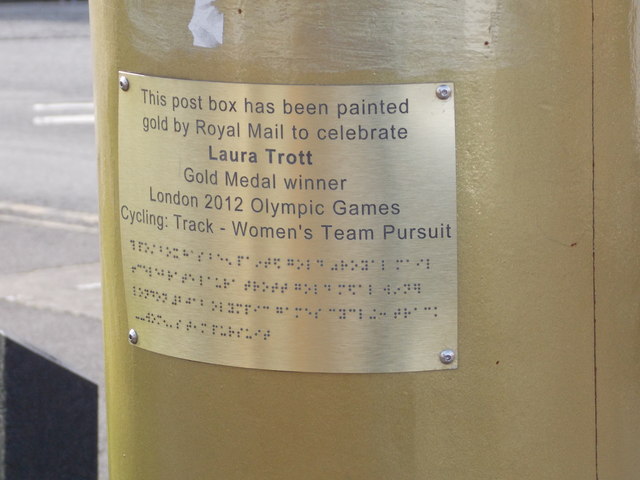
Finally, on 2 November 2012, another update was announced: the gold post boxes would not revert to red after six months, as originally planned. Instead, they would remain gold permanently and be fitted with plaques—featuring both text and braille—honouring the athletes.
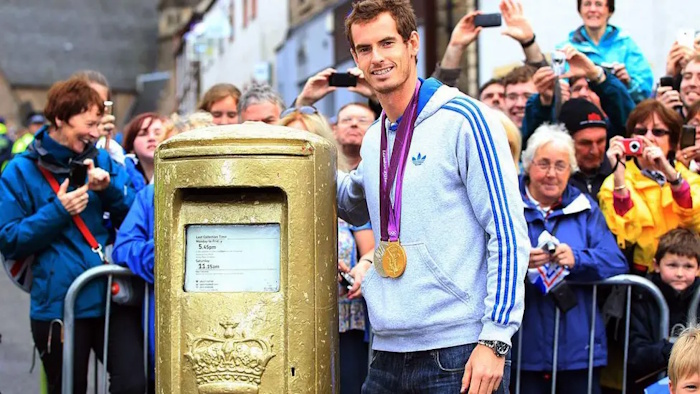
In total, there are around 111 gold post boxes across the UK. Some athletes have more than one. Most because they won more than one gold medal, but there were other reasons, such as strong connections with two places, e.g. tennis player Andy Murray received two: one in Dunblane, where he grew up, and another in Wimbledon, where he achieved some of his most memorable victories.
Over time, these gold boxes have become tourist attractions. Fans visit them, photograph them, and in some cases, get a little too enthusiastic—Murray’s box was even vandalised by people chipping off flakes of gold paint as souvenirs. Others have turned visiting all the boxes into a personal challenge.
Andy Murray next to his gold post box in
Dunblane
There’s no doubt the gold post boxes were a creative and uplifting way to celebrate sporting success. They captured a moment of national pride and brought Olympic achievement onto the everyday street.
Still, it raises a question: should they stay gold forever? Since 2012, there have been calls to repeat the idea for future Olympic Games. While the sentiment is understandable, part of what made the original idea so special was its uniqueness. A limited-time tribute—perhaps six months or a year—might have been enough to preserve that sense of occasion. What do you think? Should UK post boxes stay red?
We’ll be curious to see what people think! Thank you again to Dawn for writing this post up for us to share.
David (aka DrHyde) from London has a knack for finding just the right postcard or stamp for every recipient. He’s also a cricket umpire and has started a very funny postcard tradition that might just go on forever… Let’s meet him in this week’s spotlight!
How did you get started sending postcards? What is your earliest memory of them?
Back in the good old days everyone sent postcards when they went on holiday, and my family was no different. These days I still send postcards when on holiday, although in some places it’s getting harder to find tourist cards.
How did you come across Postcrossing? What got you hooked?
I play Go, an Oriental strategy game, and in early August 2017 I travelled to a tournament on the Isle of Man. The tradition of sending postcards to family members is so deeply-rooted that it’s almost a compulsion now, but I was surprised that I just couldn’t find any cards that showed the very pretty village I was staying in. The only cards I could find were for the TT motorcycle races, which don’t even go through that village!
I mentioned this to another player at the tournament and the conversation meandered around a bit but he mentioned Postcrossing, I thought it sounded interesting, and I sent my first card shortly after returning home. I thought I’d give it a go for a bit and see what happened, and just fell in love with all the strange places that cards went to and from.
What is your favourite part of the Postcrossing process?
Early on I most looked forward to receiving cards from new places. It’s been a few years now so I don’t get many new places, although they do still appear occasionally. My most recent strange places were card AE-38540 from the UAE, and AR-28414 from Ushuaia, the closest place you can get to Antarctica without getting your feet wet.
These days I enjoy more sending cards, trying to match a card to a random stranger’s profile. I sent GB-1918737 to a gentleman whose profile said he is into ships and tools, so that card shows some of the tools that were custom-made for the construction of a replica of a 7th century ship, and I sent GB-1918735 to a lady who volunteers for her church and likes religious cards.
I also try to match stamps to peoples’ profiles. Here in the UK we are blessed with a vast number of special stamps on all kinds of themes. Some stamp collectors complain that they are “extruded philatelic product” whose purpose is to make money instead of being paragons of the art of stamps. I agree, they are a blatant commercial wheeze. But I’m not a collector, I want to use the stamps, and so that vast variety is just what I want.
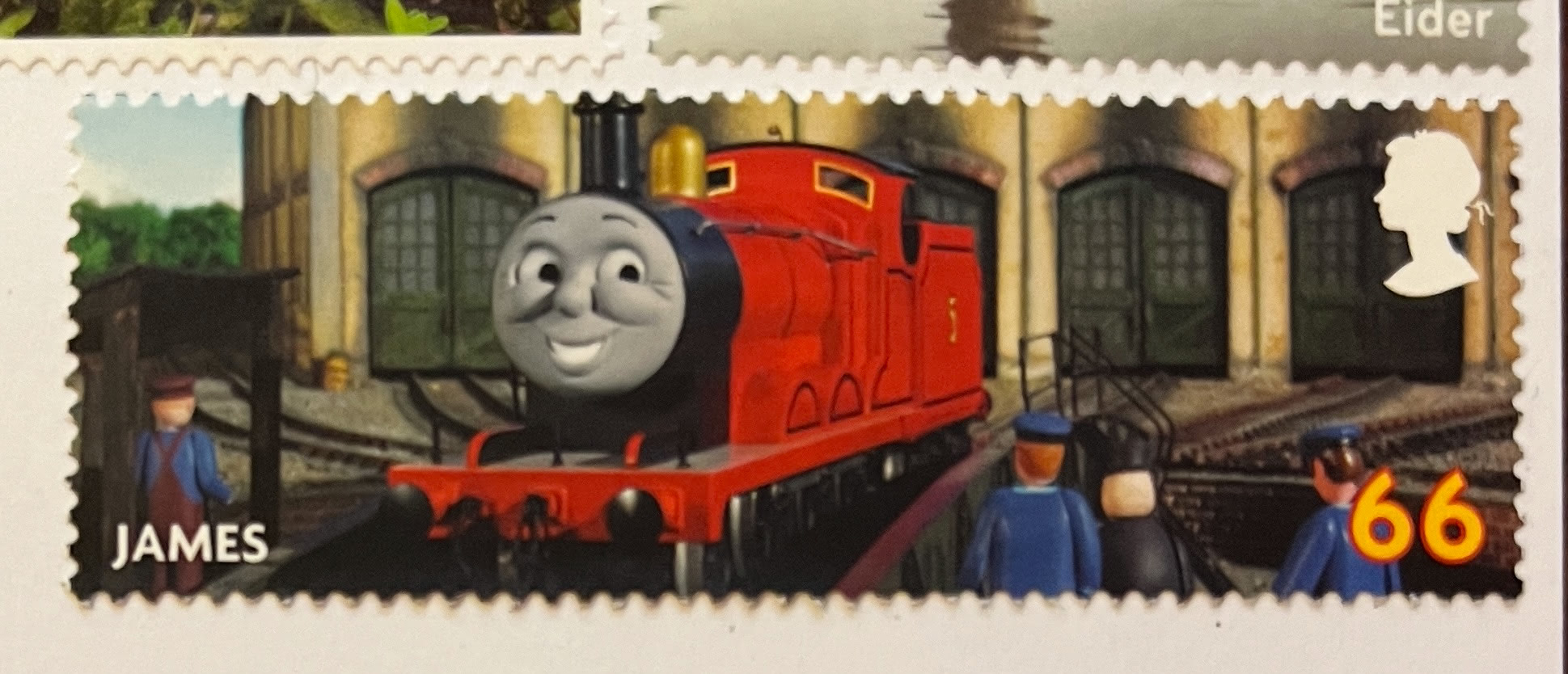
I always keep some Harry Potter stamps in stock because so many people are fans. I also always have lots of stamps showing wildlife and plants. And a couple of weeks ago, sending a card to someone called James, I just felt compelled to use this stamp!
Have you been surprised by any place that you have received a postcard from or sent a postcard to?
Given how well-connected the whole world is now I kinda expect to exchange cards with people all over the place. The biggest surprise has been how few I’ve exchanged with people in Africa. I’ve received just one official card from South Africa and one from Tunisia, out of almost 1500 cards total.
Show and tell us about your favourite received postcard to date, and what makes it special.
One of the things I ask for on my profile is recycled product packaging. My absolute favourite “postcard” of all time is US-8313703, made from a takeaway pizza box.
Show us your mailbox, your mailman/mailwoman, your post office or the place where you post or keep your postcards!
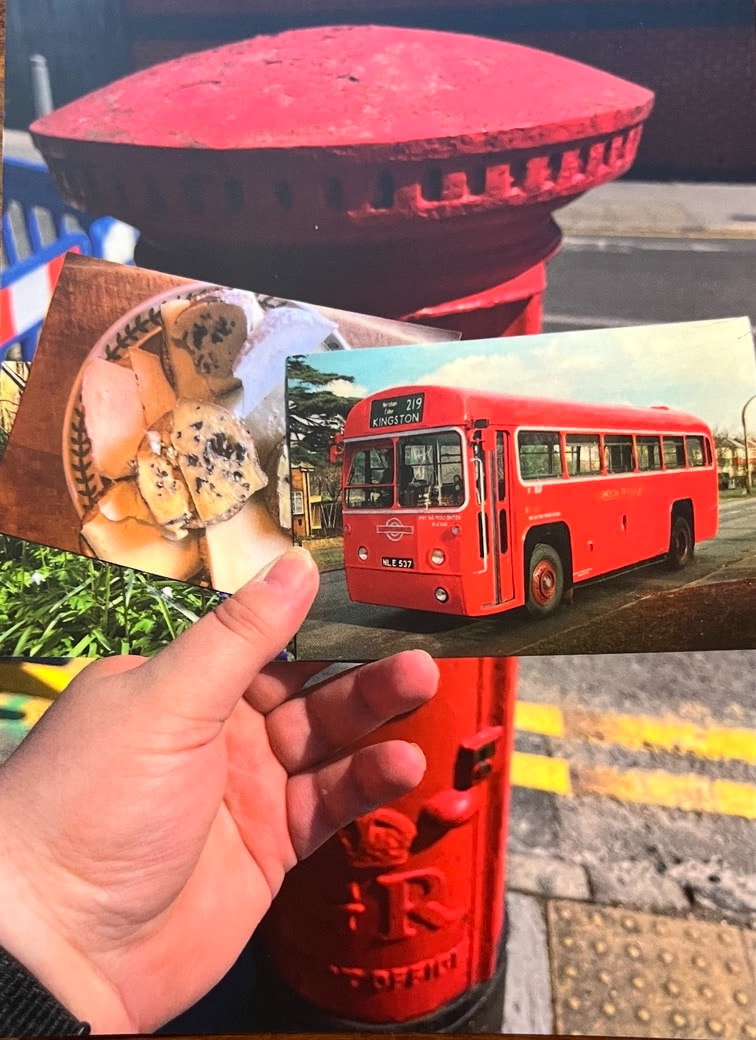
A few years ago I took a selfie of me about to post some cards, to illustrate a post on Mastodon where I was talking about Postcrossing. Then I realised that Postcrossing people often like postal-themed cards, so I turned that photograph into a postcard.
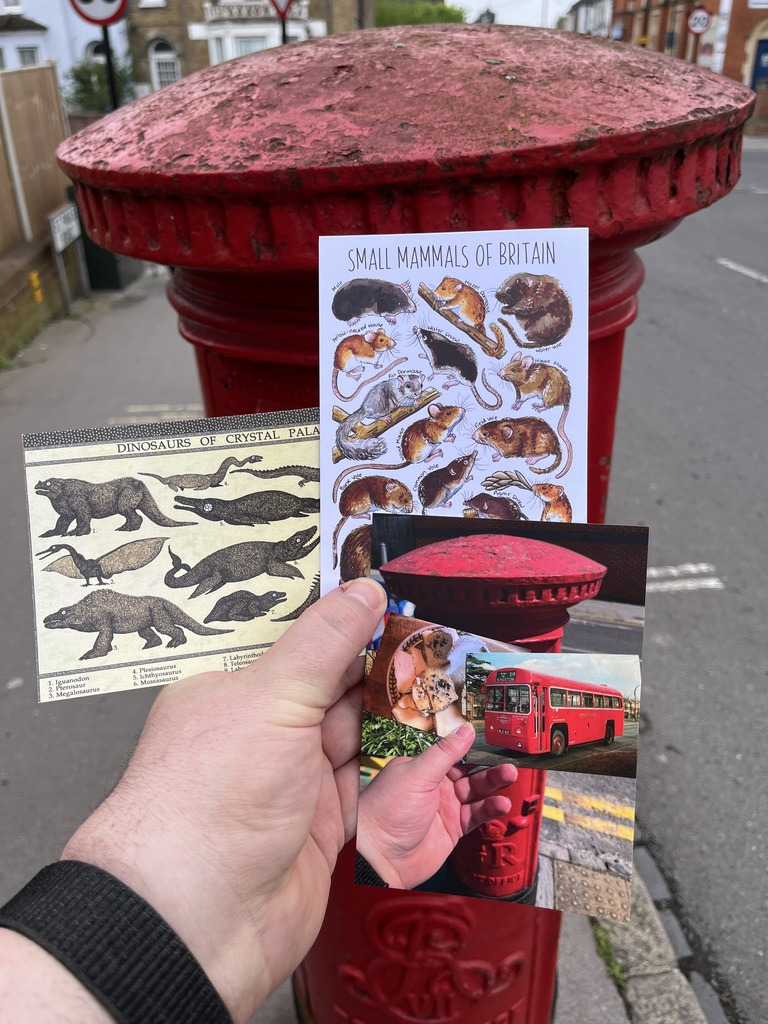
Of course, I had to take a photograph of me posting that card too, and that photograph in turn got turned into a postcard.
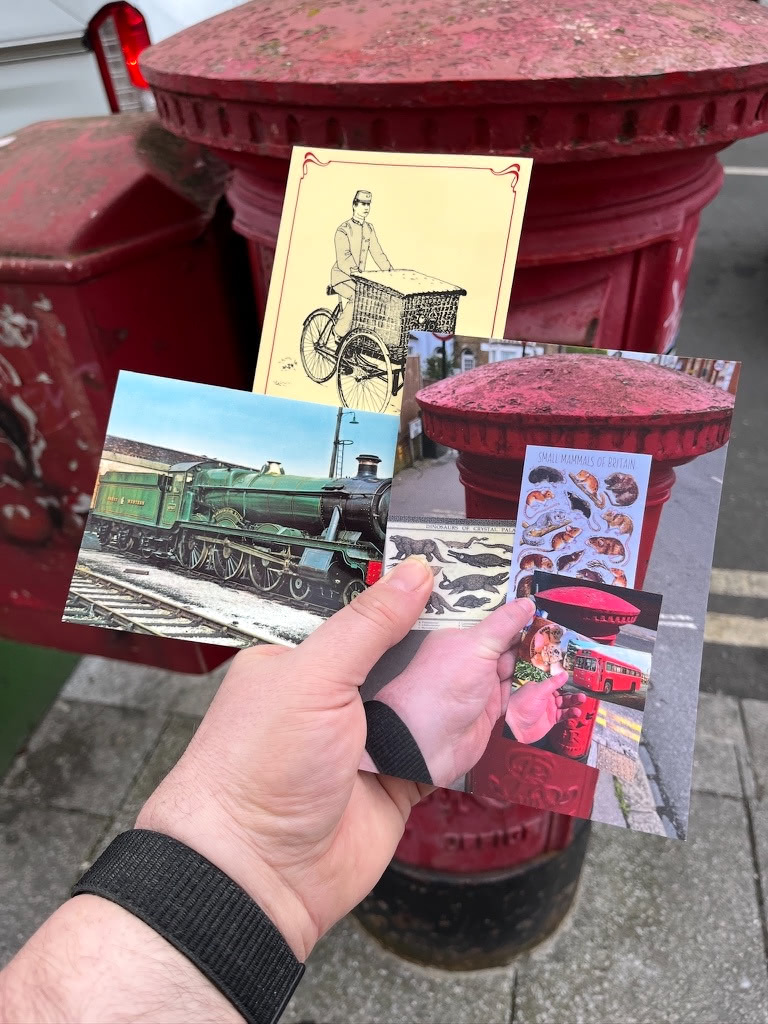
And I’m going to continue this silly game FOR EVER! The next one in the series is:
Do you have any other interesting hobbies or collections?
I am a cricket umpire! I officiate in the local league and for schools. I stopped playing the game after leaving school, but got back into it about a decade ago. Turns out that taking a break of 25 years really doesn’t help one to play very well, so I decided to take up umpiring instead – and I enjoy it far more than I ever enjoyed playing!
If you enjoy watching a sport then I really recommend giving umpiring/refereeing a go. Actually learning the rules (most fans really don’t know the details) will make the game more enjoyable when watching from the stands, but being out there on the pitch in charge of the match is the absolute best place from which to watch the match.
The writing prompts invite postcrossers to write about a different topic on their postcards’ messages every month. These are just suggestions though — if you already know what you want to write about, or the recipient gives you some pointers, that’s great too!
After a long, hot and very dry summer, finally we’re well into autumn here in the UK, and getting plenty of rainy days, so this prompt seemed pretty apt…
In November, write about your ideal rainy day.
I’m personally a huge fan of a good rainy day, I must admit. It’s no fun if it ruins plans to do something outdoorsy, of course, and it’s keeping me from going cycling more often than I’d like, but all the same there’s something magical to me about the sound of rain outside. There was a rainy night recently where the rain was just torrential, and I always really like watching it fall, watching it run down the road and splash up in a big dramatic whoosh when someone drives through a puddle… (And I do love being in a car driving through those puddles, at least as a passenger!)
My ideal rainy day is probably mostly spent inside listening to the rain, ideally tucked up warm and dry with a book or two (or three, let’s be honest). Working when it’s rainy means I don’t really get chance to just pause and listen to it, so that’s less fun: when I’m reading, though, the rain helps it feel like my own little world, and if I want to pause and watch the rain, I can do that any time. If I’m not reading, I could also spend my time crocheting: at the moment I’m working on a blanket, which makes things very cosy!
Mind you, there’s still a toddler part of me that loves to splash through puddles, too! Really light misty rain isn’t that fun, but I don’t mind being out in a heavy shower with big puddles I can splash in, as long as there’s a warm home waiting for me once I’ve had my fun.
How about you? Can you find the joy in rainy days? You can write about your ideal rainy day on your postcards this month, but we’d also love to hear about it in the comments here!
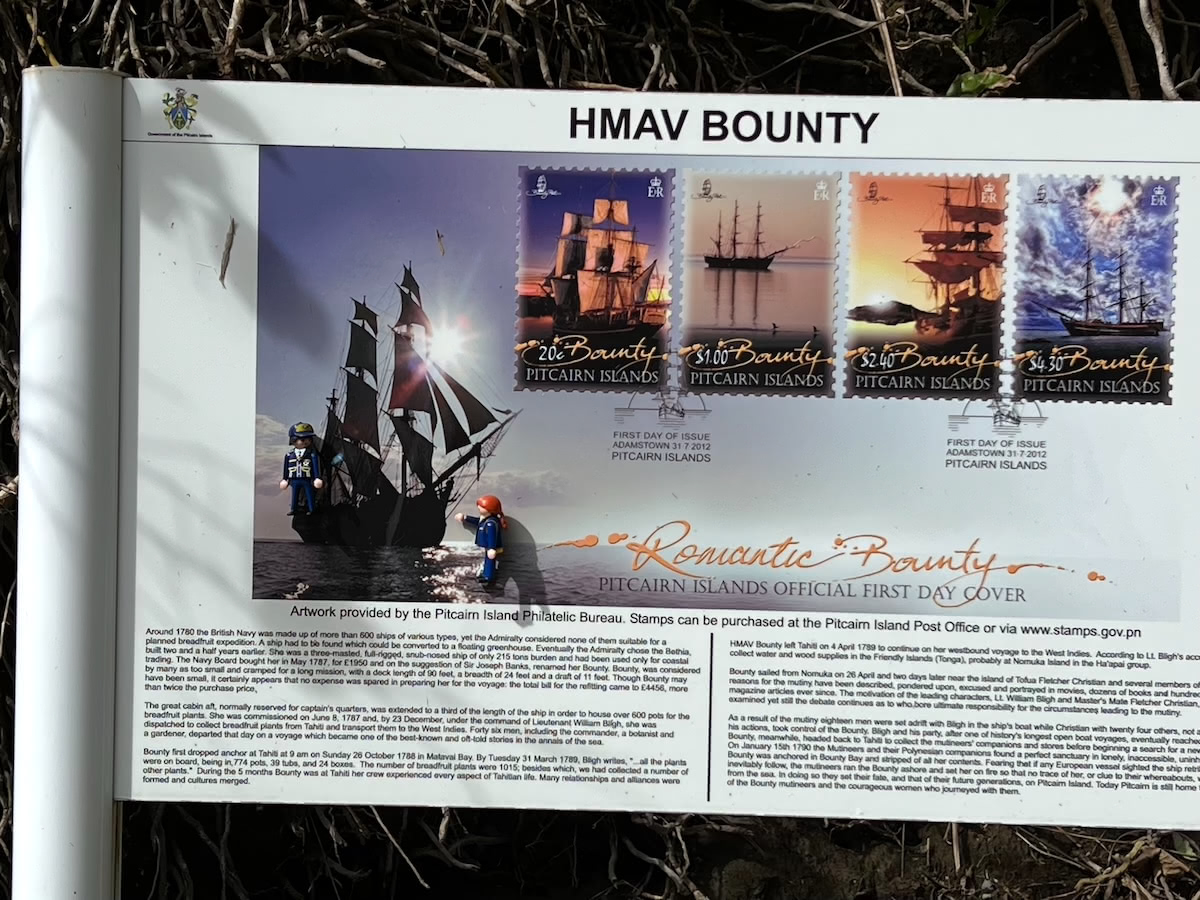
The Little Mail Carriers have finally reached one of the most remote places on their Pacific adventure! After their travels through French Polynesia with postcrossers Maret (aka Cerres) and Andry (aka andry1961), it was time to leave the airplanes behind and board a ship bound for Pitcairn. The tiny island is famous for its connection to the mutiny on the Bounty, but getting there is an adventure in itself, especially when the Pacific Ocean decides not to cooperate!
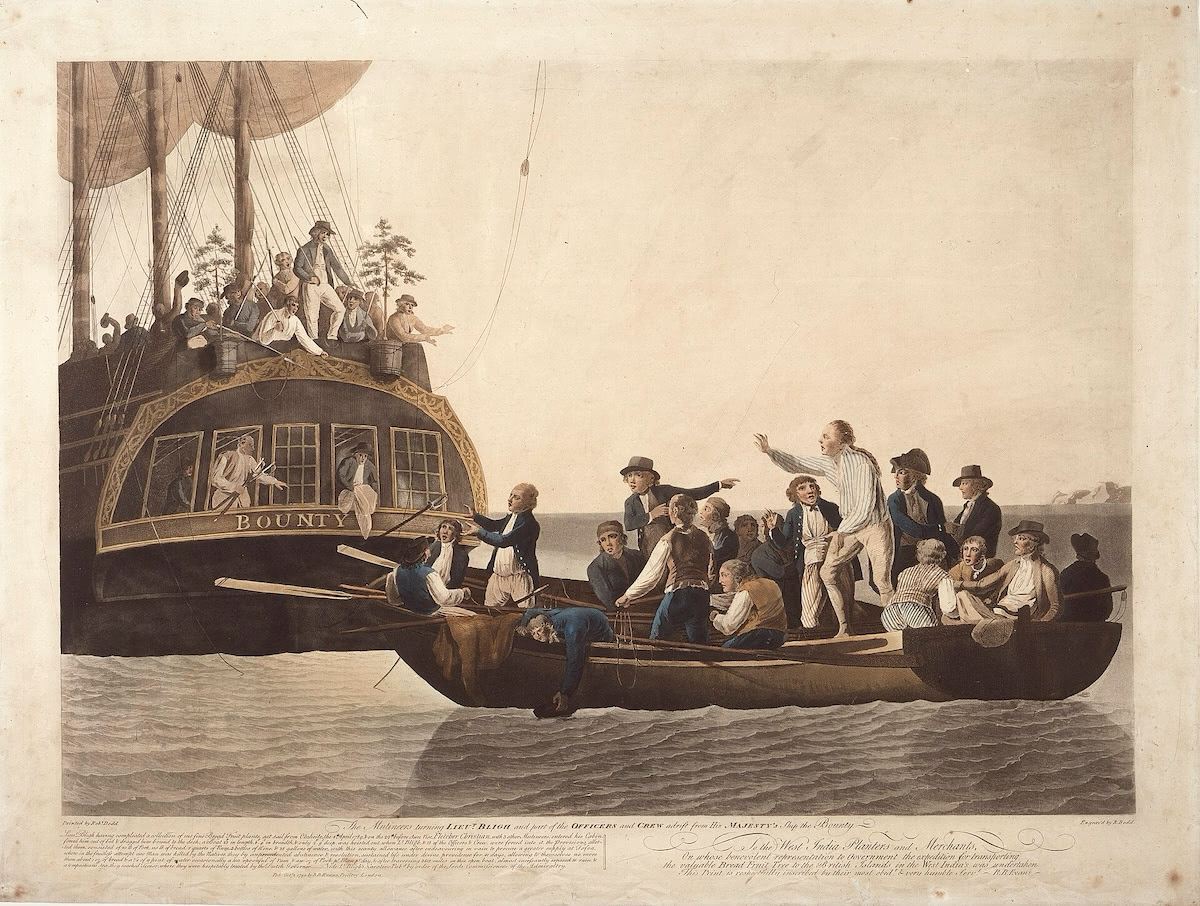
The history of Pitcairn is incredibly intriguing, and it’s closely connected to one of the most famous stories in maritime history: the mutiny on the Bounty. In 1789, the British ship HMS Bounty was returning from Tahiti when a group of sailors, led by Fletcher Christian, rebelled against their commander, William Bligh. They forced Bligh and 18 loyal crew members into a small open boat and set them adrift in the Pacific. Remarkably, Bligh managed to navigate the boat thousands of kilometres to safety!
Fletcher Christian and the mutineers set Lieutenant William Bligh and 18 others adrift, depicted in a 1790 aquatint by Robert Dodd (from Wikipedia).
Meanwhile, the mutineers needed somewhere to hide from the British authorities. After some unsuccessful attempts to settle elsewhere, Christian and eight other mutineers, together with six Polynesian men, twelve women and a child, eventually reached Pitcairn in January 1790. The island was remote, difficult to reach and incorrectly marked on nautical charts, making it an ideal hiding place. After unloading their supplies, they burned the Bounty in what is now known as Bounty Bay, to prevent passing ships from discovering them. The settlement they established would eventually become the small community that lives on Pitcairn today, whose ancestry includes both the British mutineers and their Polynesian companions.
The story has inspired numerous books and films, including several adaptations of Mutiny on the Bounty. In 2017, a documentary even followed eight men attempting to recreate Captain Bligh’s extraordinary journey in a small boat. It’s quite something to think that we were about to visit the island where this famous story unfolded!
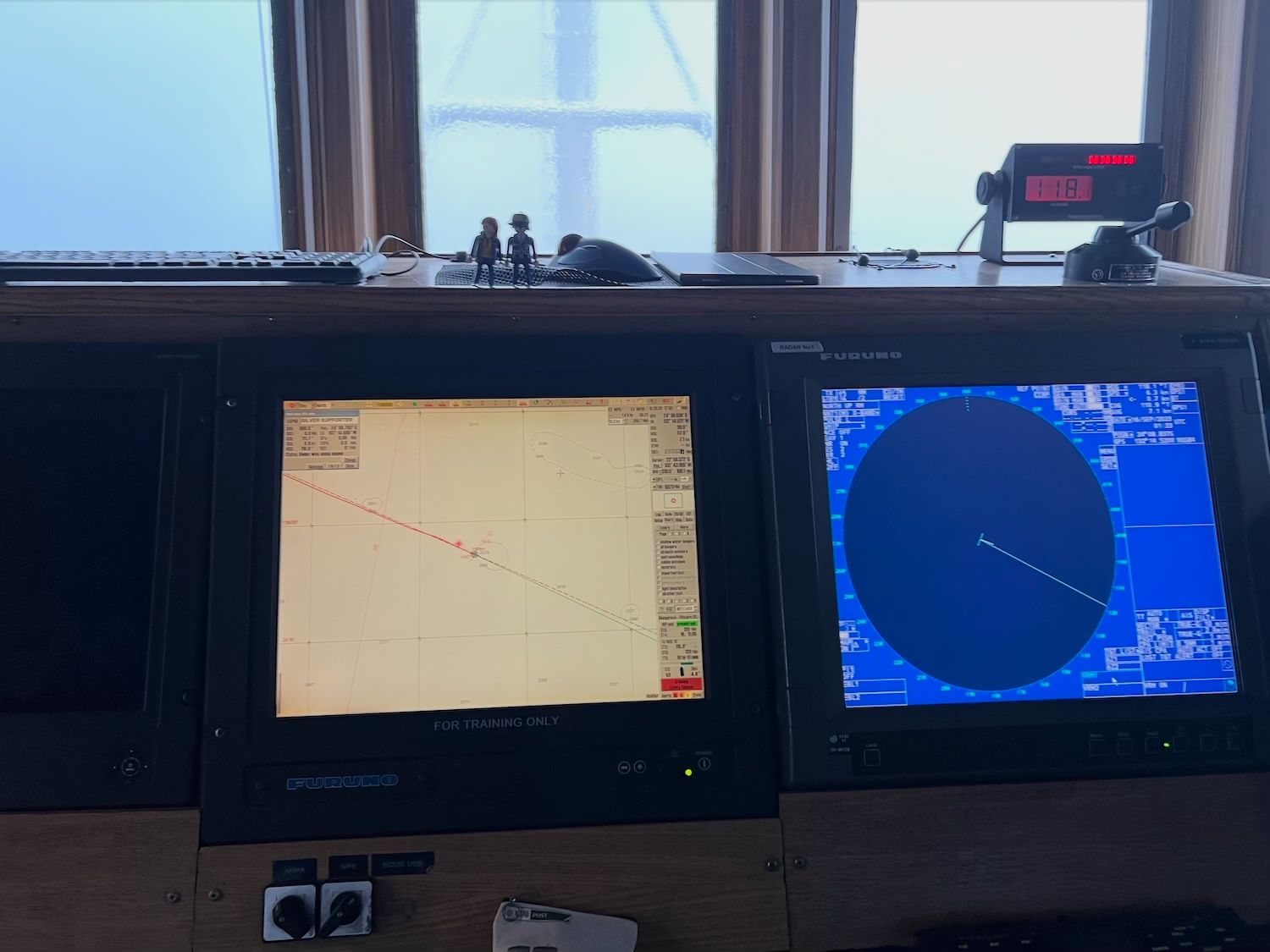
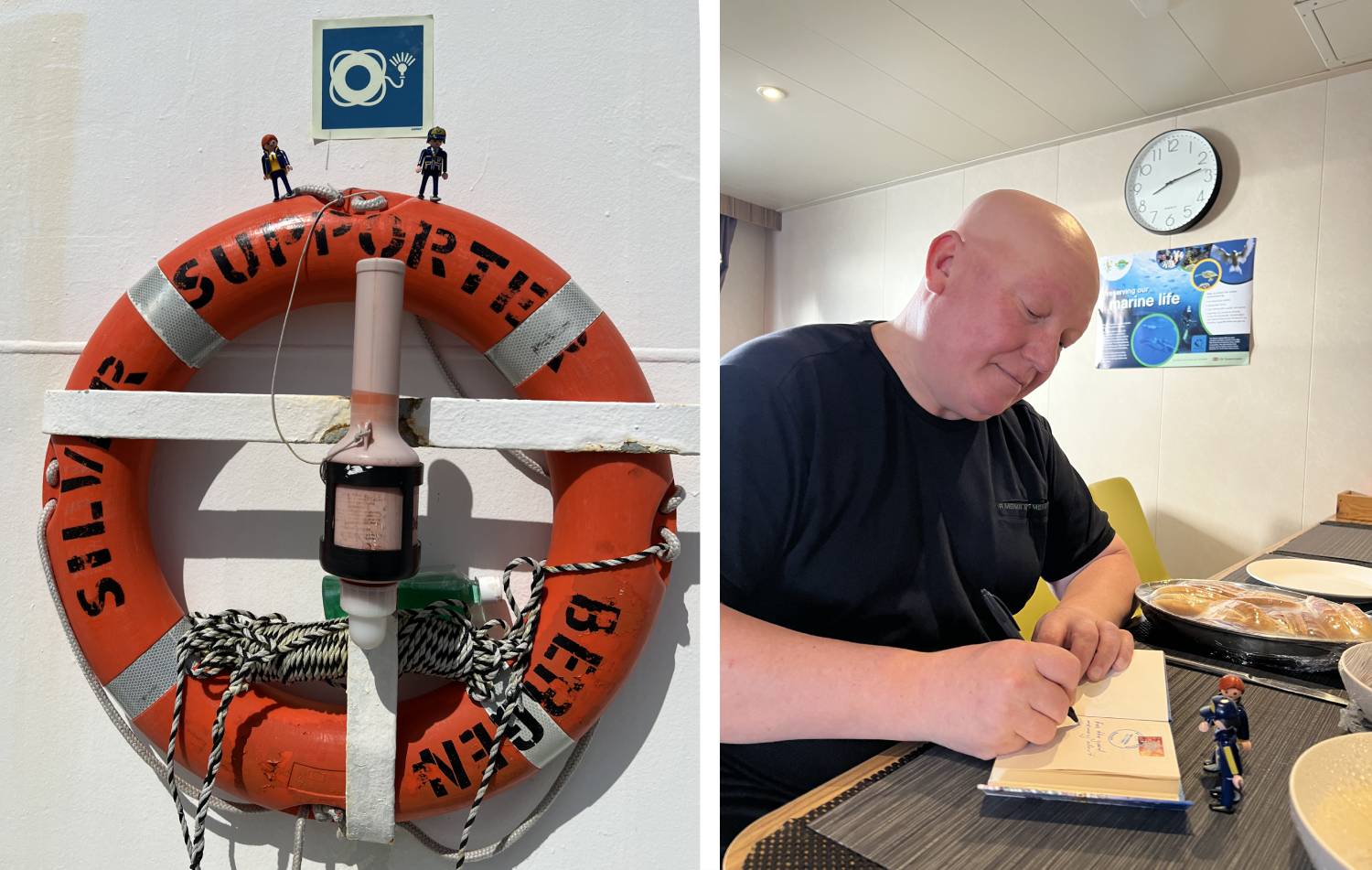
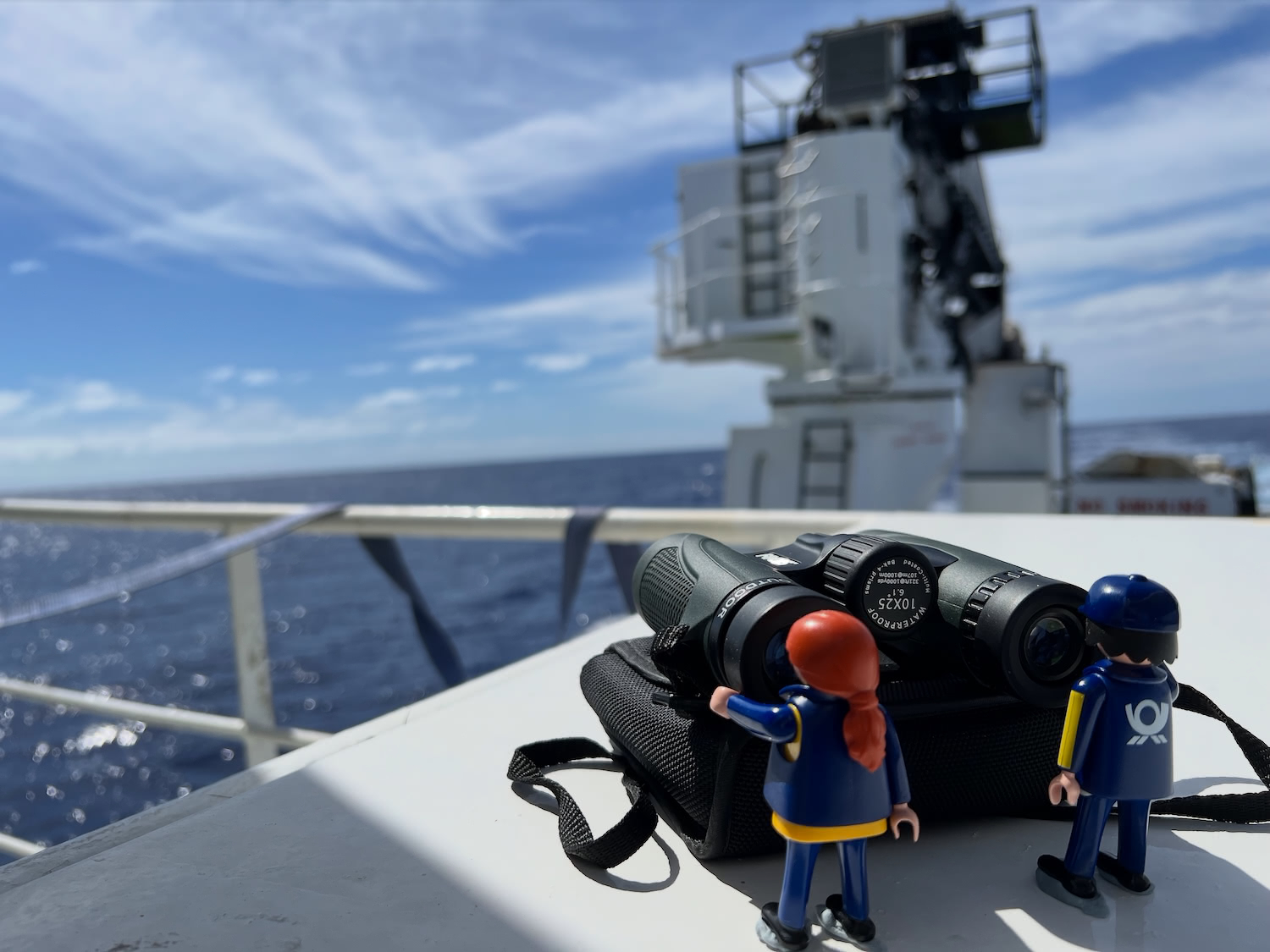
The vessel that sails between the nearest port, Mangareva (in French Polynesia), and Pitcairn is the Silver Supporter, a 51-meter-long ship under the Norwegian flag. It accommodates a maximum of 12 passengers and crew. In addition to us, there were scientists from England and New Zealand, and a new police chief with his wife.
The usual travel time on this route is about 32 hours. However, it soon became apparent that there was a storm and strong headwinds in these waters, unlike anything the senior officer, who had been sailing this route for five years, had ever witnessed in this part of the ocean.
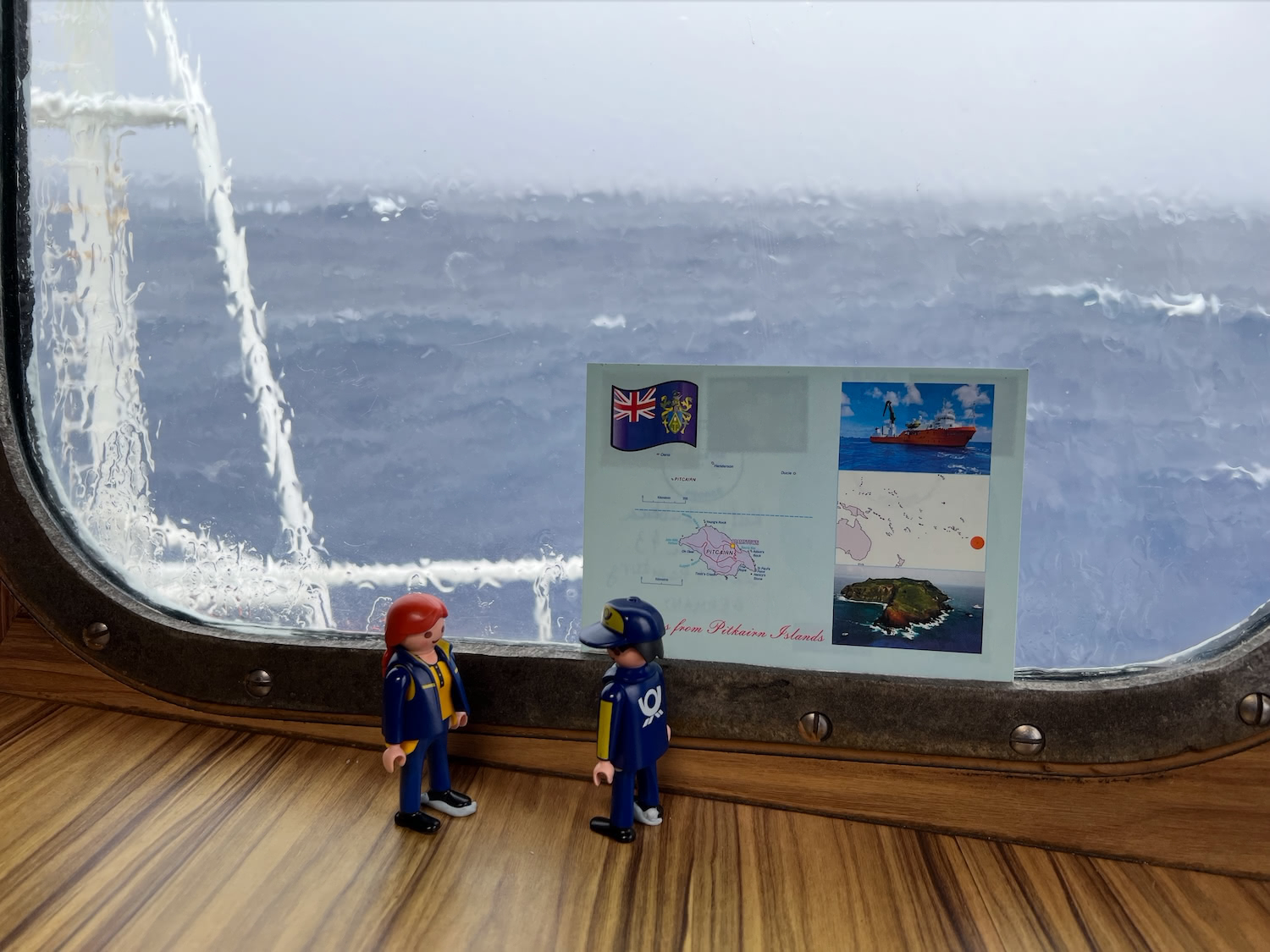
The wind really rocked and shook the ship, but we were in capable hands. We couldn’t help thinking about the Bounty, which was nearly the same length as our ship, and especially about Captain Bligh and his men, who had been set adrift in a boat only 7 meters long! Suddenly, our stormy crossing didn’t seem quite so bad…
As for us, we were immune to seasickness (though not all our fellow travellers were as fortunate), and we marvelled at the ship and the ocean during the voyage.
Our vessel also had a ship’s stamp. Since the ship sailed under the Norwegian flag and our travelling companions had brought Norwegian postage stamps, we were able to send some cards with Norwegian stamps and the ship’s stamp from the Pacific Ocean, adding the word “Paquebot”. Of course, we posted them from Pitcairn! This special postal arrangement applies to mail carried aboard ships and posted at a port of call.
Instead of the anticipated 32 hours, it was 48 hours into our journey when we finally spotted the island. Pitcairn Island is approximately 3.2 kilometres long and 1.6 kilometres wide. Unlike the previous islands we had visited, Pitcairn is not surrounded by coral reefs. At the time of our visit, there were fewer than 40 inhabitants!
The teacher and police officer came from New Zealand, while other roles were filled by locals. With no more children of school age living on the island, the school was no longer operating.
Since we only had a day and a half left from our planned three and a half days, we had to use our time wisely to see as much as possible. Thanks to local customs, this was made quite easy.
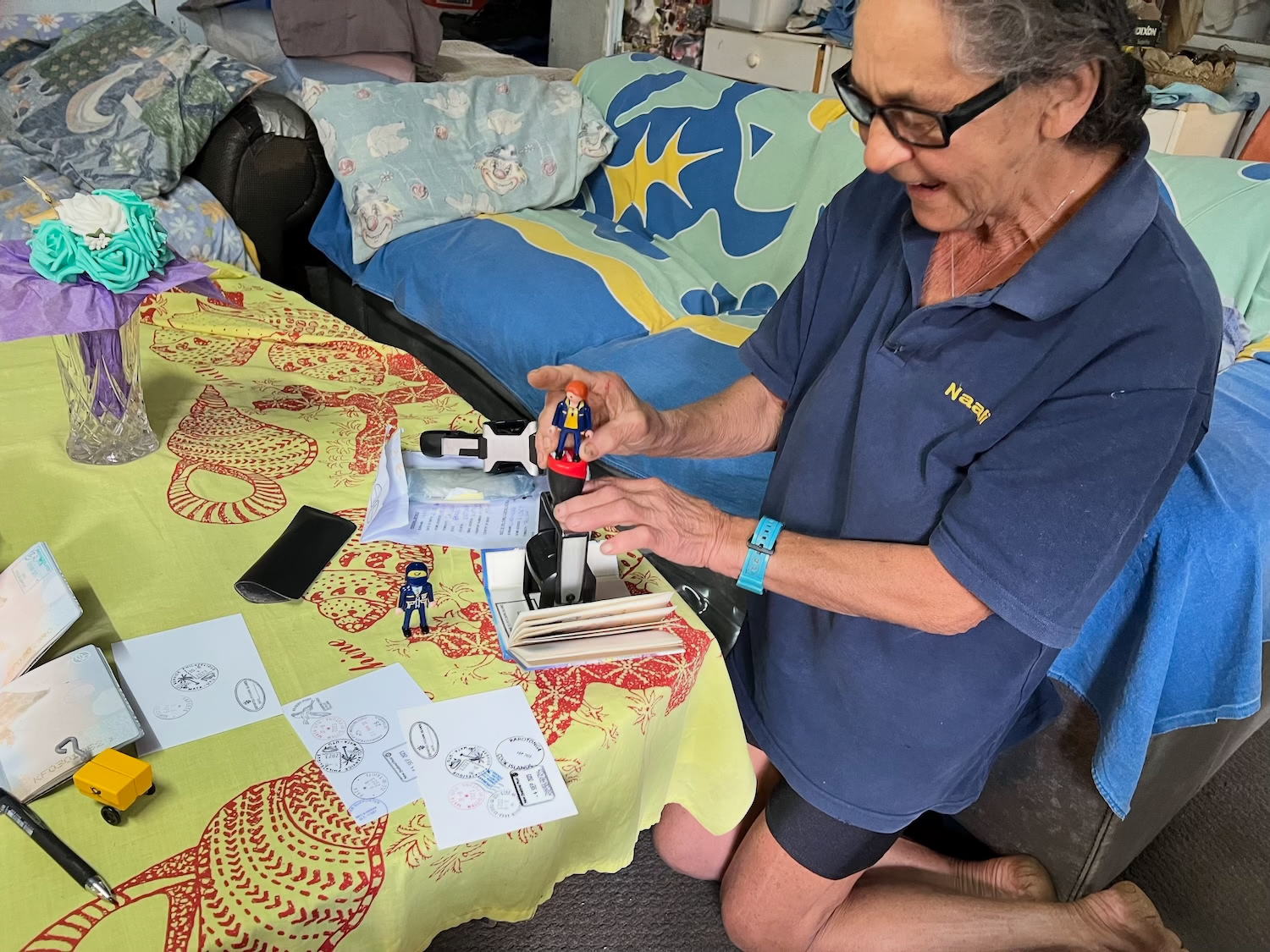
The island offers only homestays. We didn’t have to show our documents to the border guard at the port; instead, she came on an ATV to our accommodation! She sat on the floor, stamped our passports, and left welcome notes in our notebook too.
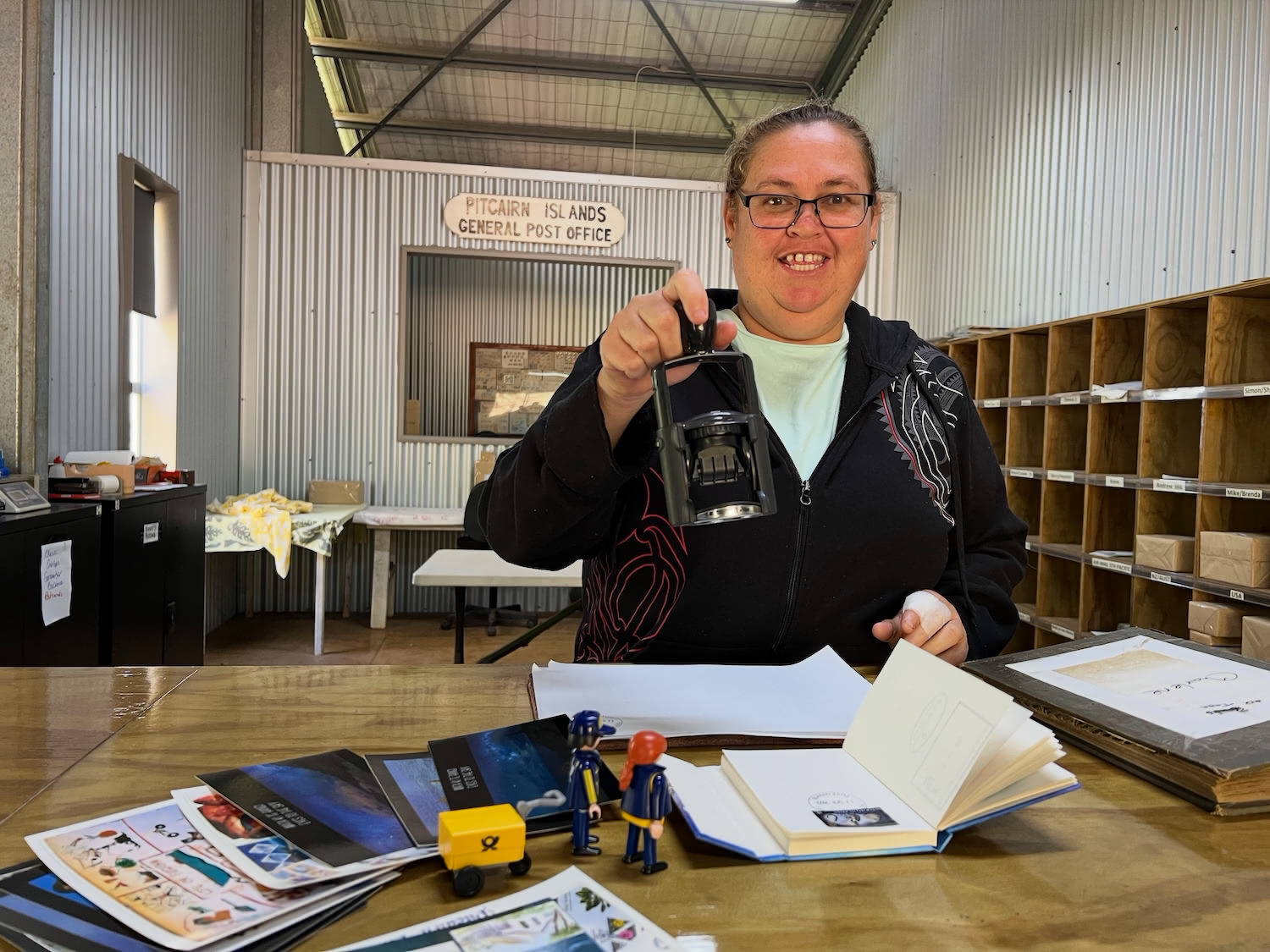
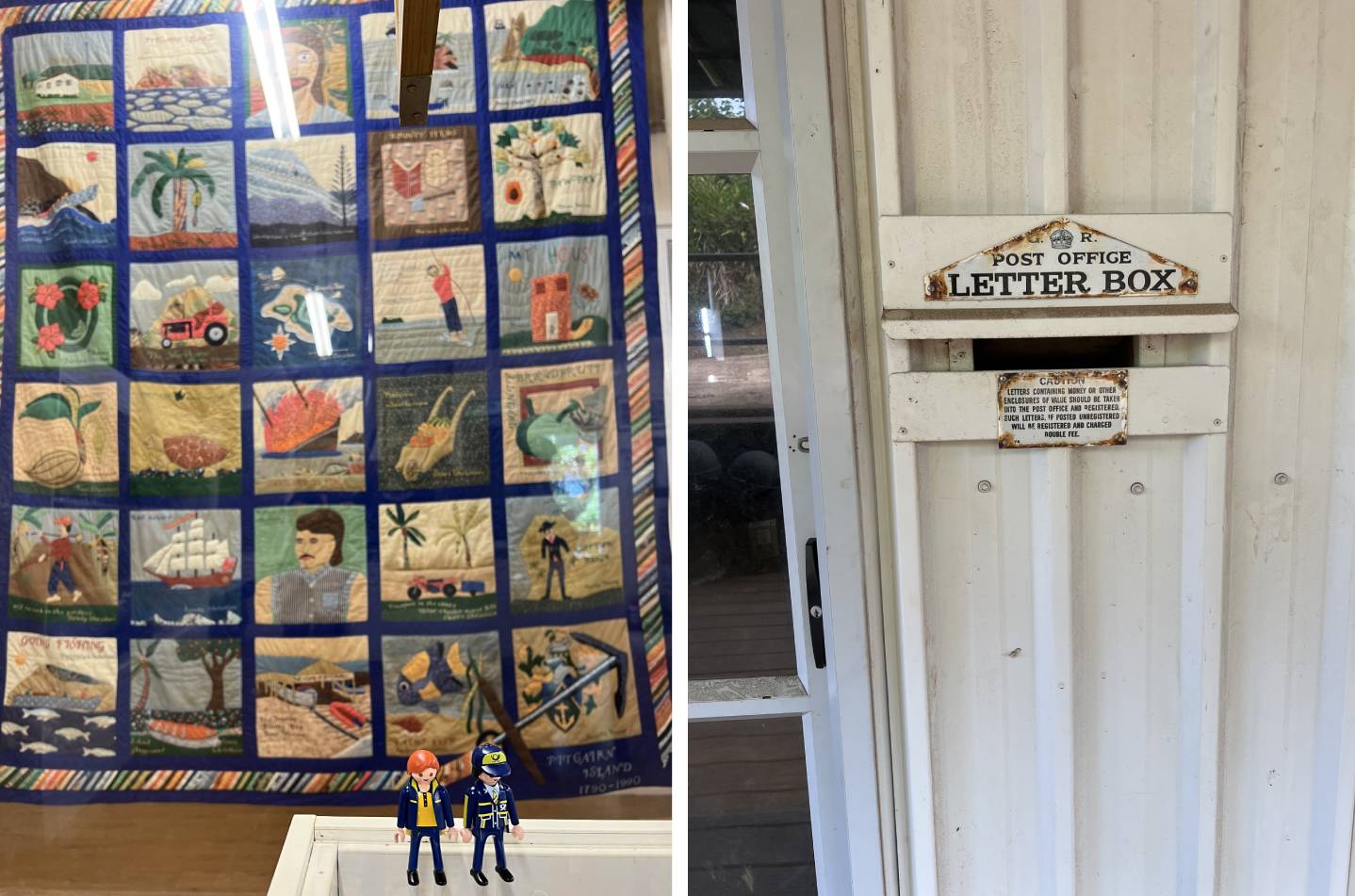
We visited the post office the following morning. For incoming mail, each family has its own shelf, and if someone receives mail (or there’s something else important to report), the walkie-talkie that stays on 24 hours a day starts making noise in every home.
Knowing that just a couple of hours would not be enough for our visit to the post office, Charlene, a post office employee, took the date stamp and came to our homestay. She was also our host’s daughter, and effectively transformed the living room into a pop-up post office!
The same ship we arrived on becomes a mail ship four times a year, transporting mail to and from New Zealand. The departure date was already set, so we knew our postcards would only start travelling five and a half weeks after we left the island. Patience is definitely part of sending postcards from Pitcairn!
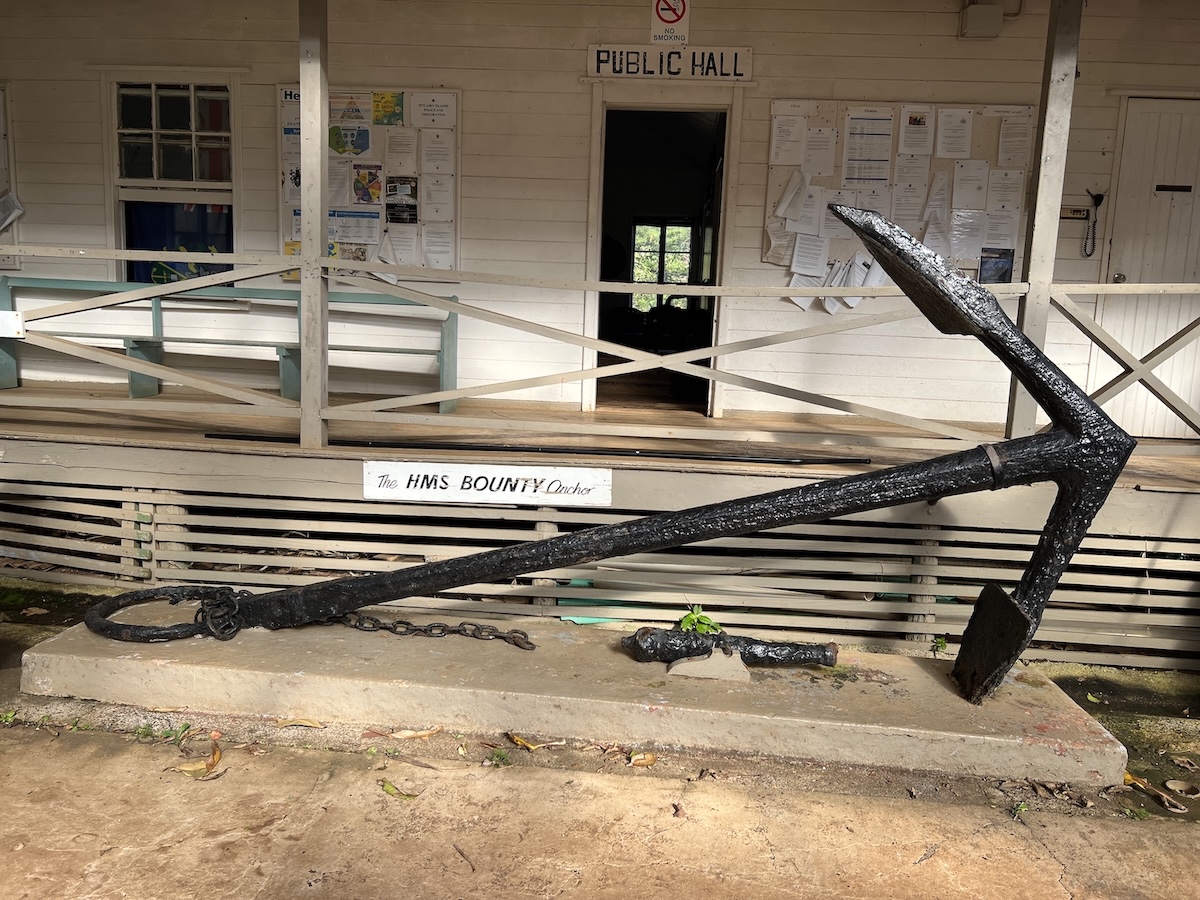
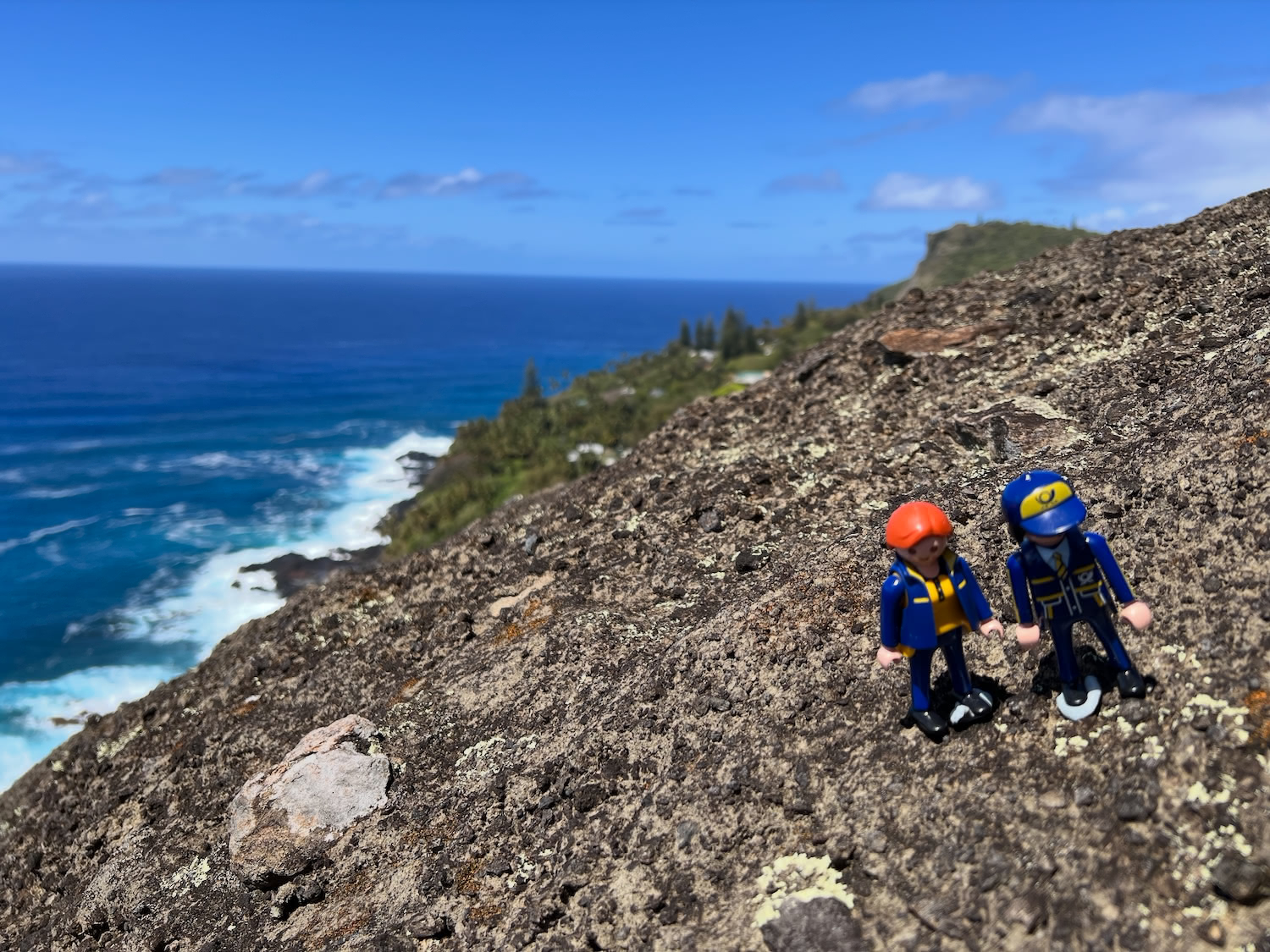
Having arrived in such a special place, we couldn’t just sit in our rooms. With the help of our host and the local police officer (whom we had already met on the ship), we managed to visit several important places: the museum, the church, the island’s highest point (Pawala Valley Ridge, at 347 metres), Christian’s Cave, and Bounty Bay. Seeing the places connected to the Bounty’s story made the history we’d been reading about feel much more real!
And then it was time to say goodbye. The entire village came to see us off once again. The same crew awaited us, but thankfully, the return journey was almost windless!
With that, our journey was nearly complete. We flew from Mangareva to Tahiti, and from there to New Zealand, then continued through Singapore and Istanbul before finally arriving back in Europe. Curiosity paid off this time!
And what an adventure it was! A huge thank you to Maret and Andry for taking the Little Mail Carriers along on this incredible journey across the Pacific, and to all the friendly postal workers and islanders who welcomed them along the way. We’ve loved discovering these faraway places through their photos and stories, especially all the little details of how mail works in such remote corners of the world. From tiny island post offices to living rooms transformed into postal counters… it was quite a trip!