The Little Mail Carriers have finally reached one of the most remote places on their Pacific adventure! After their travels through French Polynesia with postcrossers Maret (aka Cerres) and Andry (aka andry1961), it was time to leave the airplanes behind and board a ship bound for Pitcairn. The tiny island is famous for its connection to the mutiny on the Bounty, but getting there is an adventure in itself, especially when the Pacific Ocean decides not to cooperate!
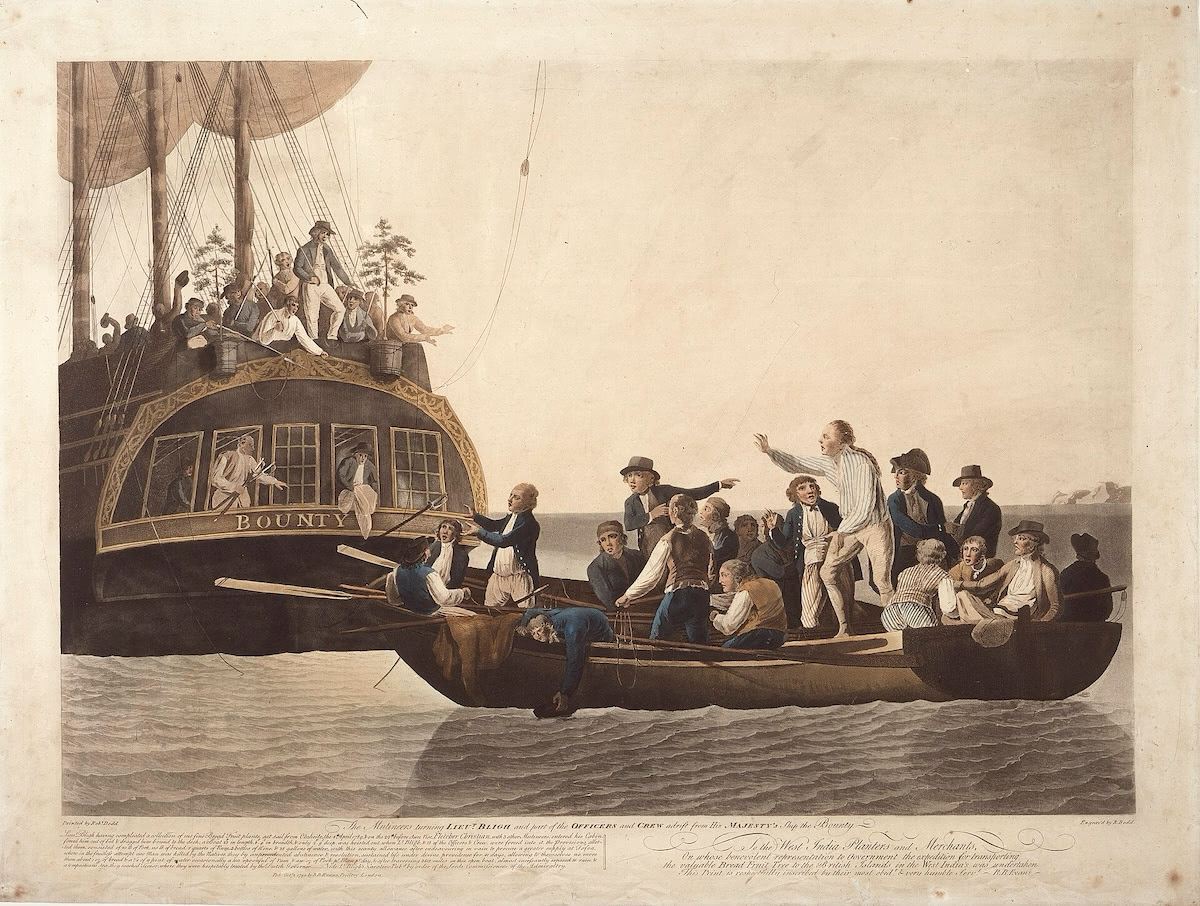
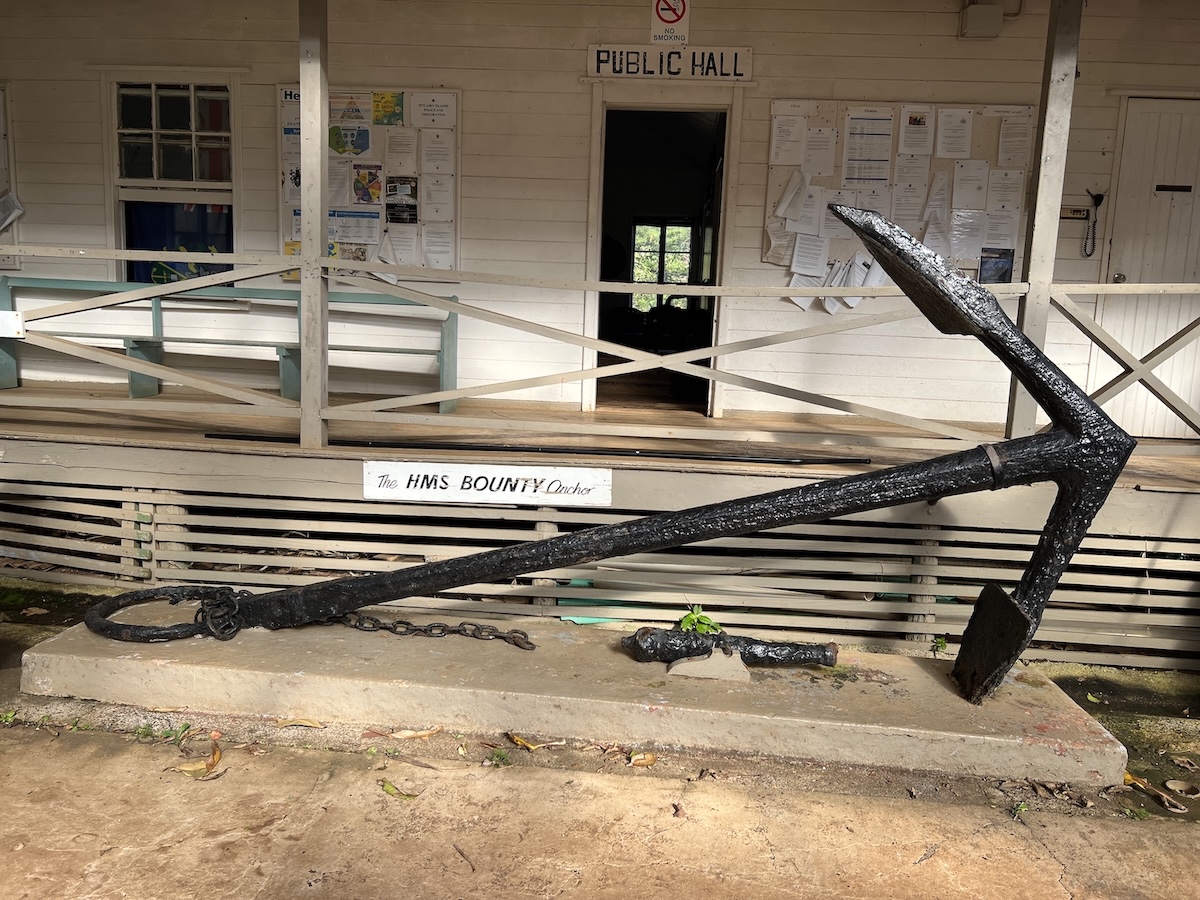
The history of Pitcairn is incredibly intriguing, and it’s closely connected to one of the most famous stories in maritime history: the mutiny on the Bounty. In 1789, the British ship HMS Bounty was returning from Tahiti when a group of sailors, led by Fletcher Christian, rebelled against their commander, William Bligh. They forced Bligh and 18 loyal crew members into a small open boat and set them adrift in the Pacific. Remarkably, Bligh managed to navigate the boat thousands of kilometres to safety!
Fletcher Christian and the mutineers set Lieutenant William Bligh and 18 others adrift, depicted in a 1790 aquatint by Robert Dodd (from Wikipedia).
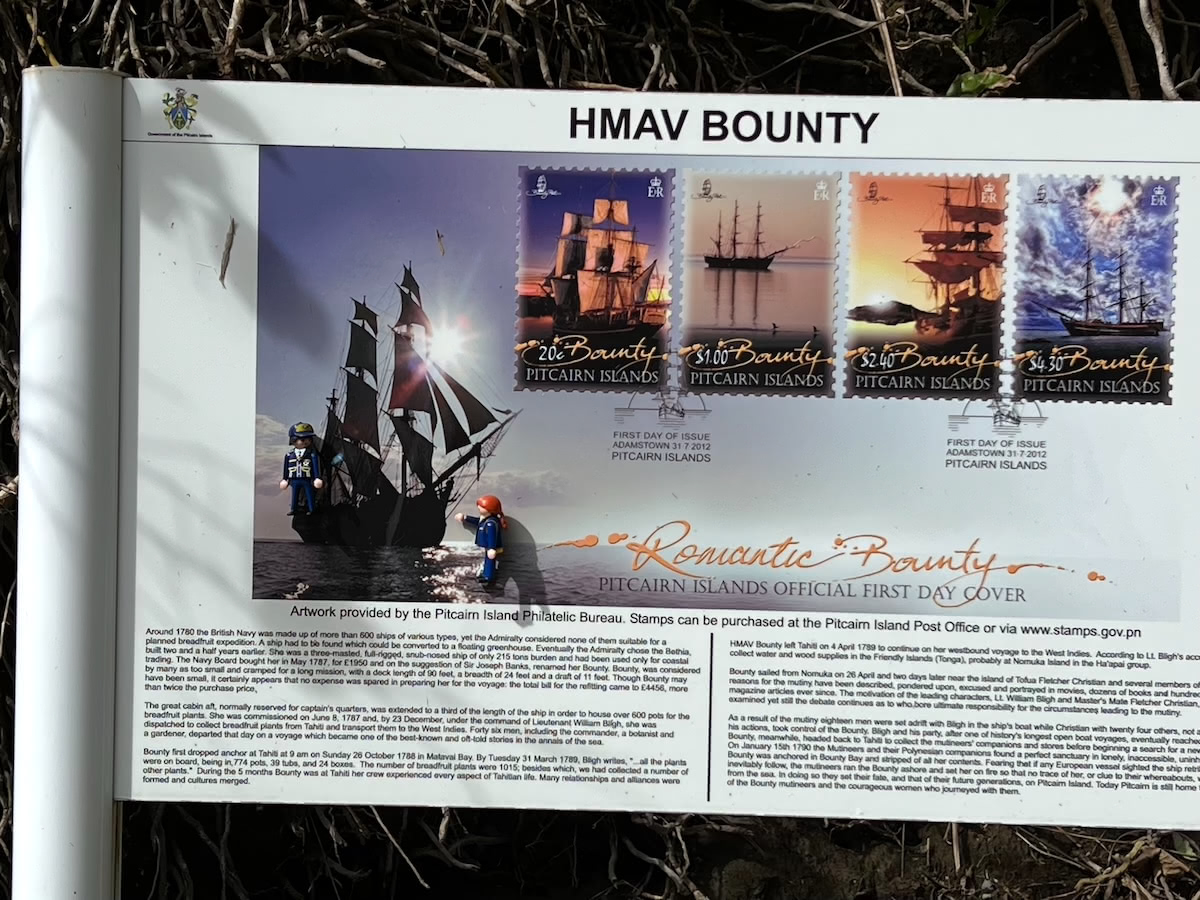
Meanwhile, the mutineers needed somewhere to hide from the British authorities. After some unsuccessful attempts to settle elsewhere, Christian and eight other mutineers, together with six Polynesian men, twelve women and a child, eventually reached Pitcairn in January 1790. The island was remote, difficult to reach and incorrectly marked on nautical charts, making it an ideal hiding place. After unloading their supplies, they burned the Bounty in what is now known as Bounty Bay, to prevent passing ships from discovering them. The settlement they established would eventually become the small community that lives on Pitcairn today, whose ancestry includes both the British mutineers and their Polynesian companions.
The story has inspired numerous books and films, including several adaptations of Mutiny on the Bounty. In 2017, a documentary even followed eight men attempting to recreate Captain Bligh’s extraordinary journey in a small boat. It’s quite something to think that we were about to visit the island where this famous story unfolded!
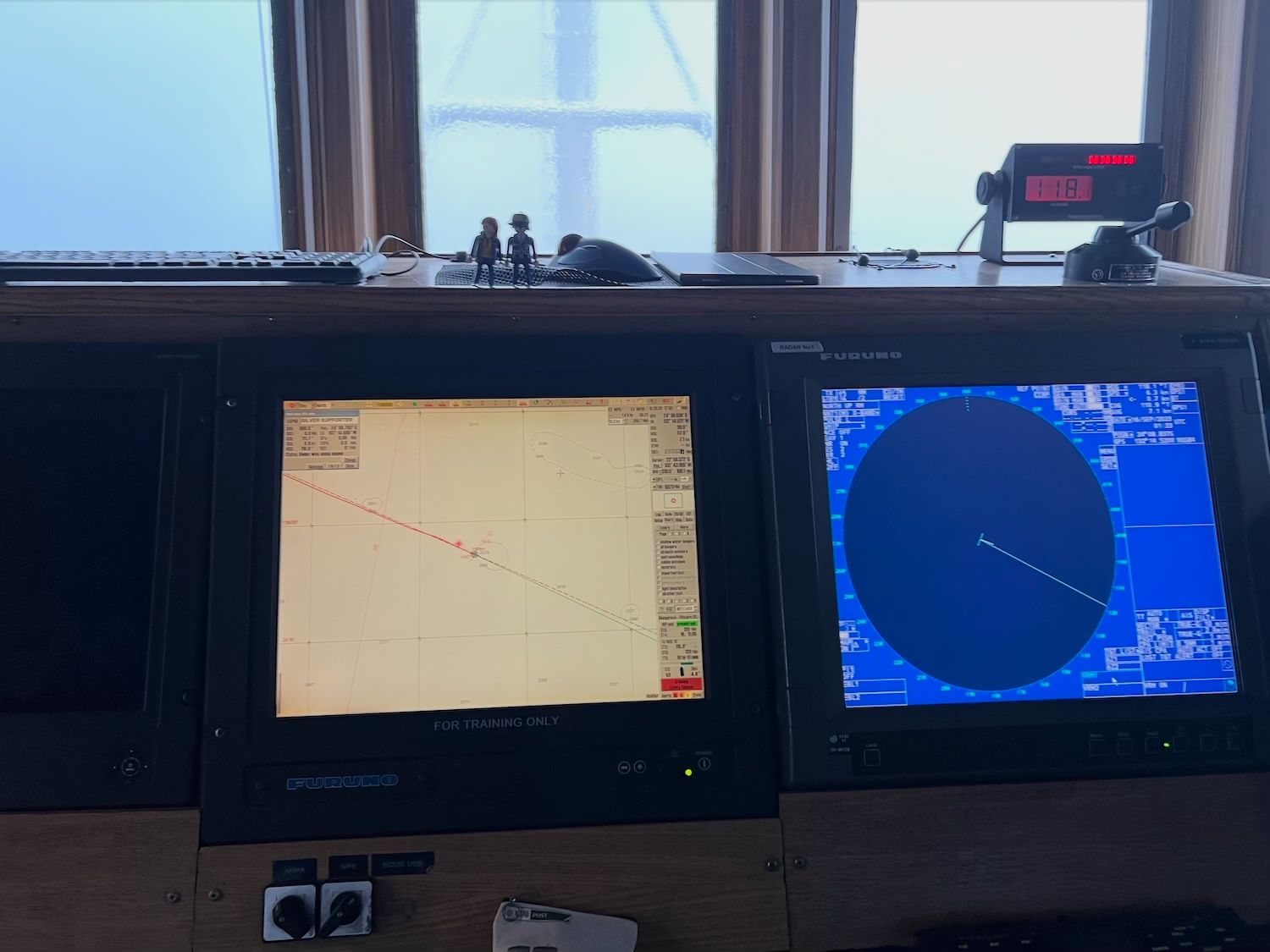
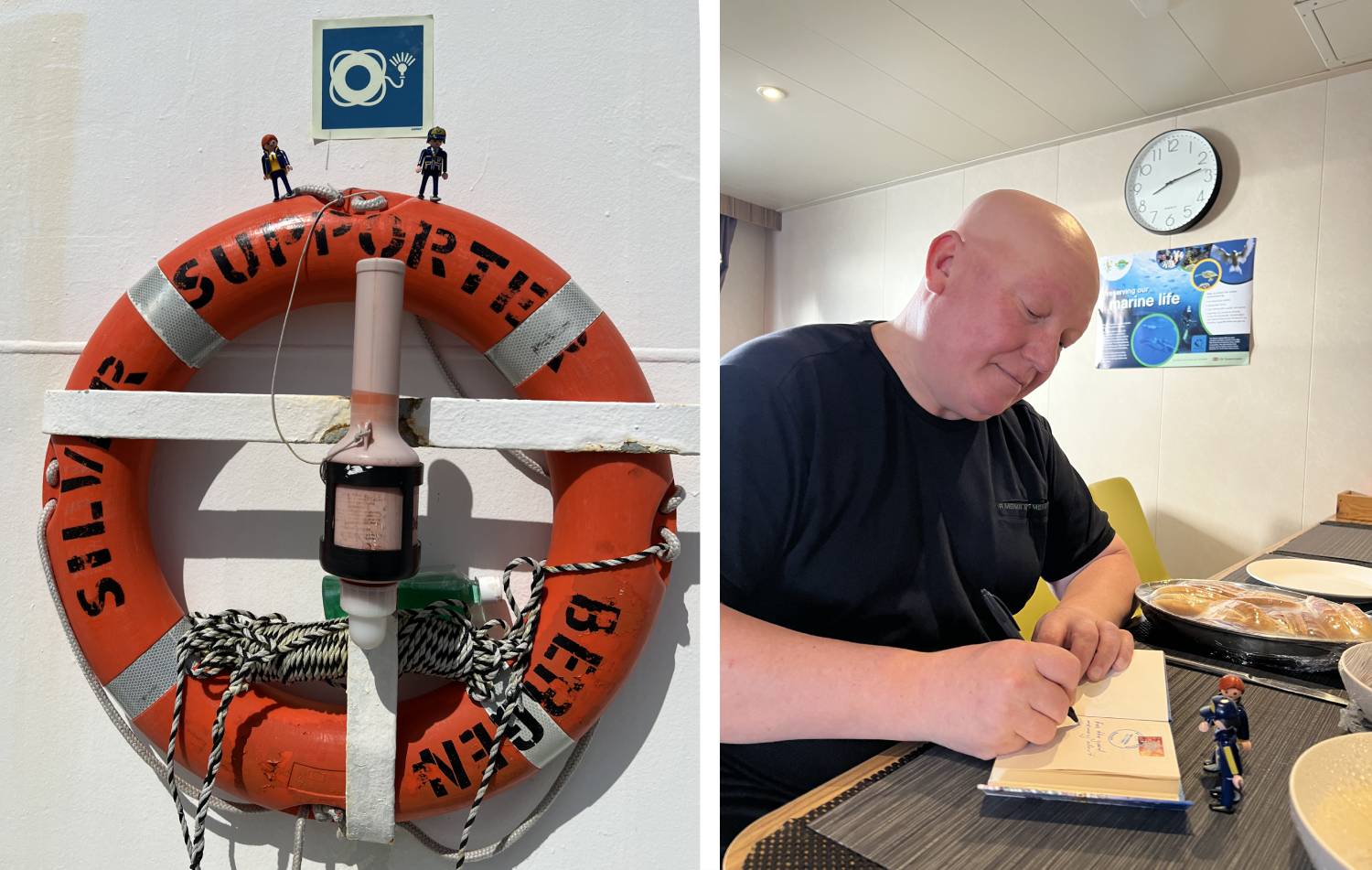
The vessel that sails between the nearest port, Mangareva (in French Polynesia), and Pitcairn is the Silver Supporter, a 51-meter-long ship under the Norwegian flag. It accommodates a maximum of 12 passengers and crew. In addition to us, there were scientists from England and New Zealand, and a new police chief with his wife.
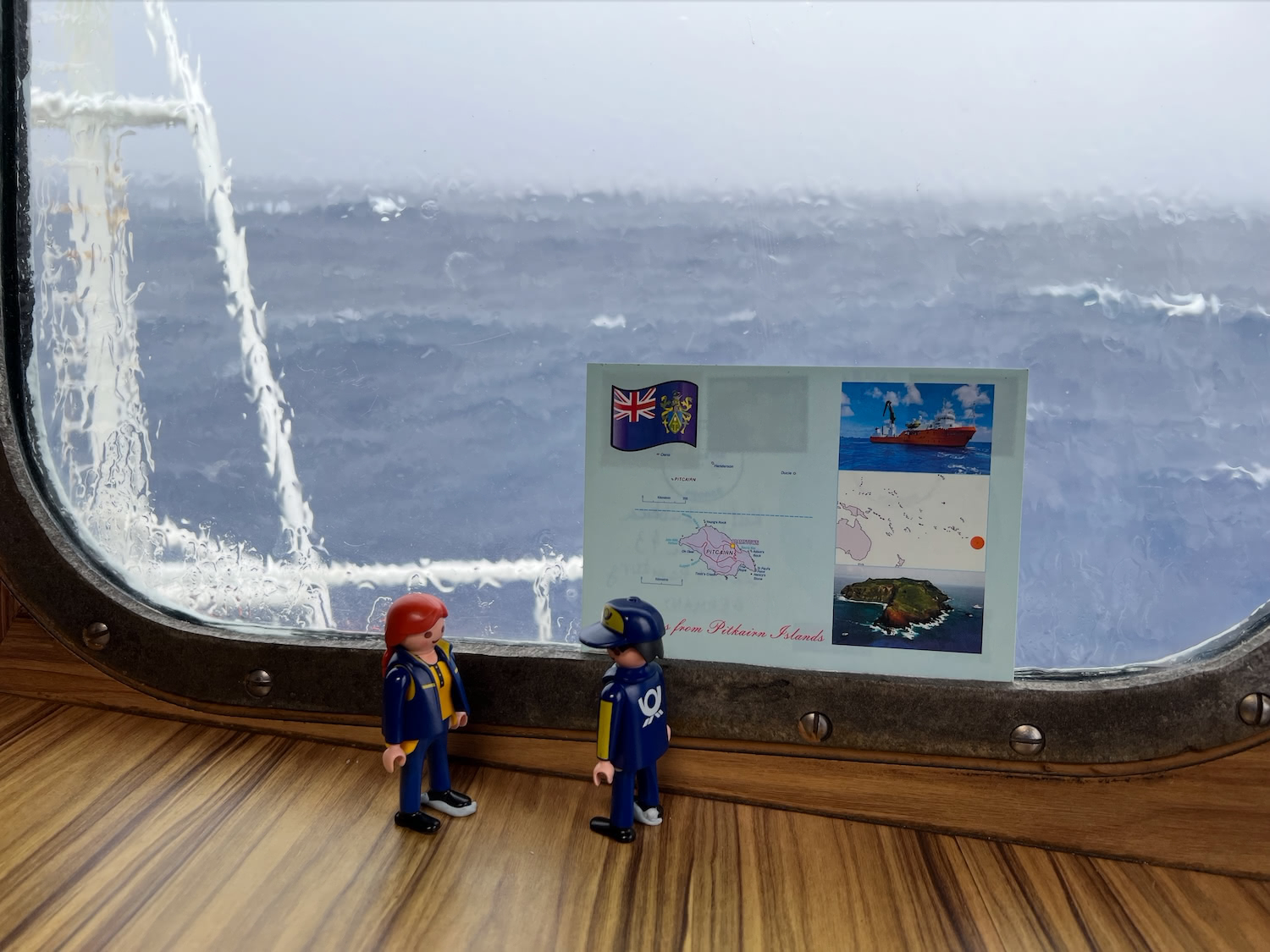
The usual travel time on this route is about 32 hours. However, it soon became apparent that there was a storm and strong headwinds in these waters, unlike anything the senior officer, who had been sailing this route for five years, had ever witnessed in this part of the ocean.
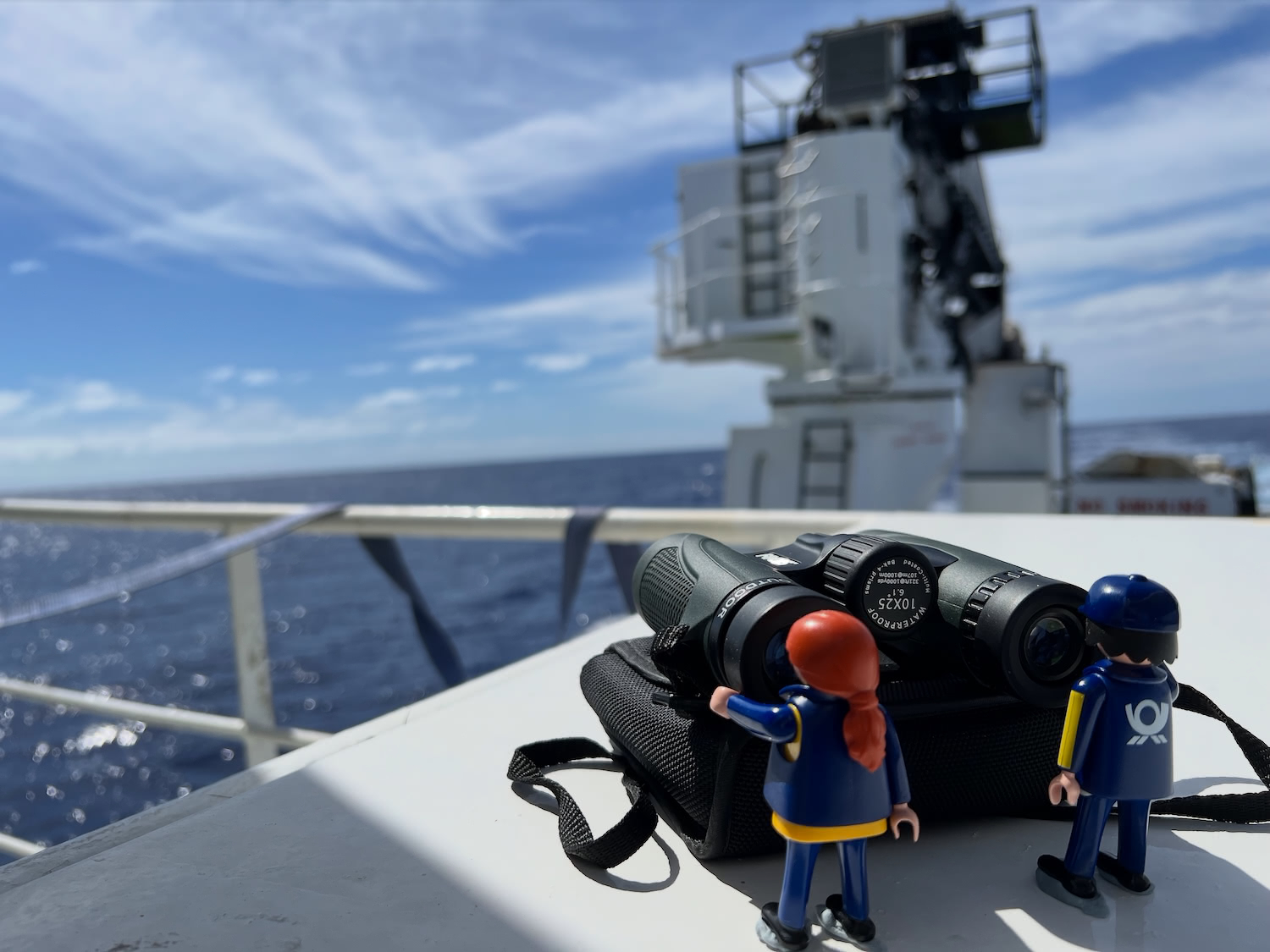
The wind really rocked and shook the ship, but we were in capable hands. We couldn’t help thinking about the Bounty, which was nearly the same length as our ship, and especially about Captain Bligh and his men, who had been set adrift in a boat only 7 meters long! Suddenly, our stormy crossing didn’t seem quite so bad…
As for us, we were immune to seasickness (though not all our fellow travellers were as fortunate), and we marvelled at the ship and the ocean during the voyage.
Our vessel also had a ship’s stamp. Since the ship sailed under the Norwegian flag and our travelling companions had brought Norwegian postage stamps, we were able to send some cards with Norwegian stamps and the ship’s stamp from the Pacific Ocean, adding the word “Paquebot”. Of course, we posted them from Pitcairn! This special postal arrangement applies to mail carried aboard ships and posted at a port of call.
Instead of the anticipated 32 hours, it was 48 hours into our journey when we finally spotted the island. Pitcairn Island is approximately 3.2 kilometres long and 1.6 kilometres wide. Unlike the previous islands we had visited, Pitcairn is not surrounded by coral reefs. At the time of our visit, there were fewer than 40 inhabitants!
The teacher and police officer came from New Zealand, while other roles were filled by locals. With no more children of school age living on the island, the school was no longer operating.
Since we only had a day and a half left from our planned three and a half days, we had to use our time wisely to see as much as possible. Thanks to local customs, this was made quite easy.
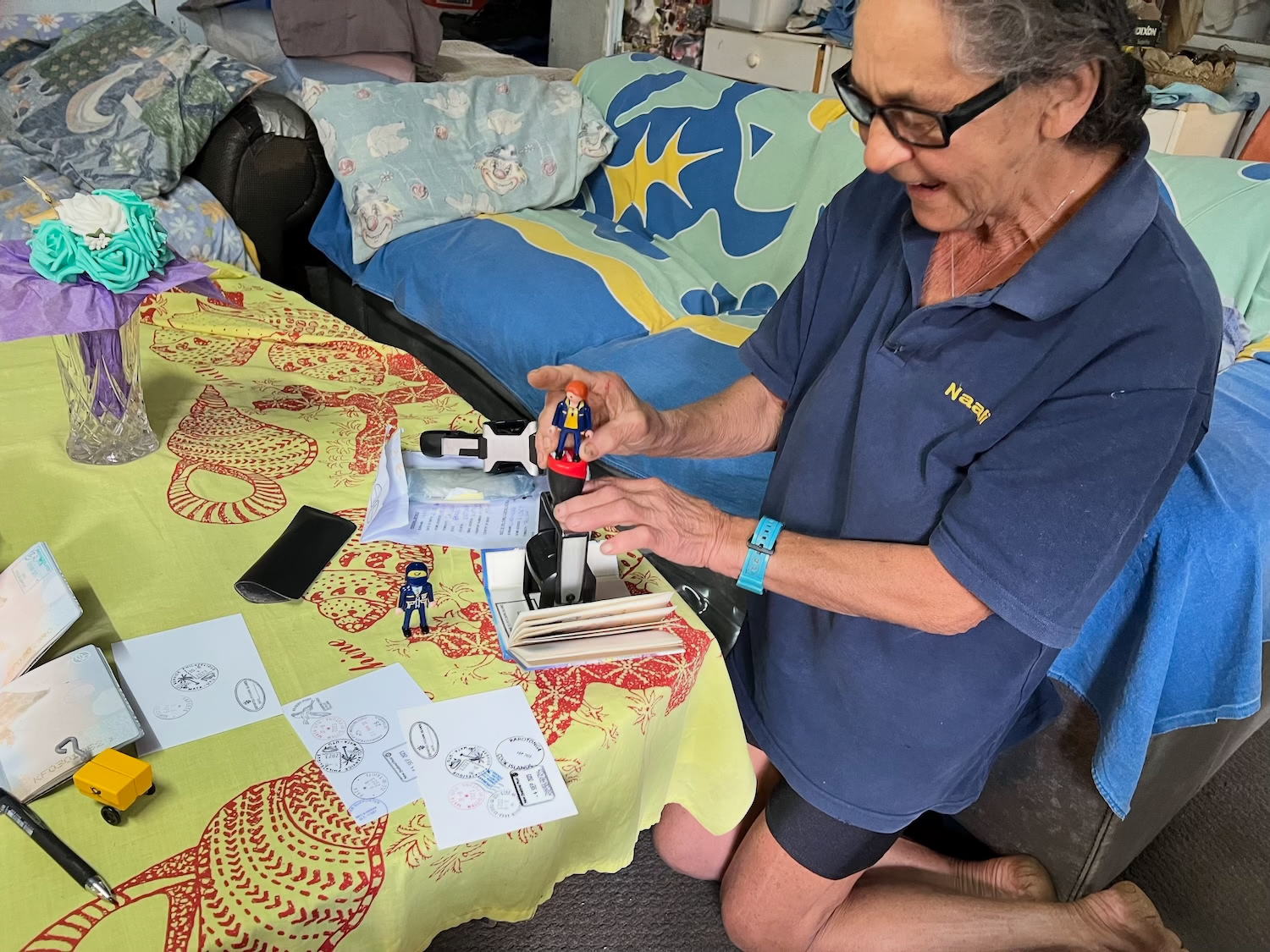
The island offers only homestays. We didn’t have to show our documents to the border guard at the port; instead, she came on an ATV to our accommodation! She sat on the floor, stamped our passports, and left welcome notes in our notebook too.
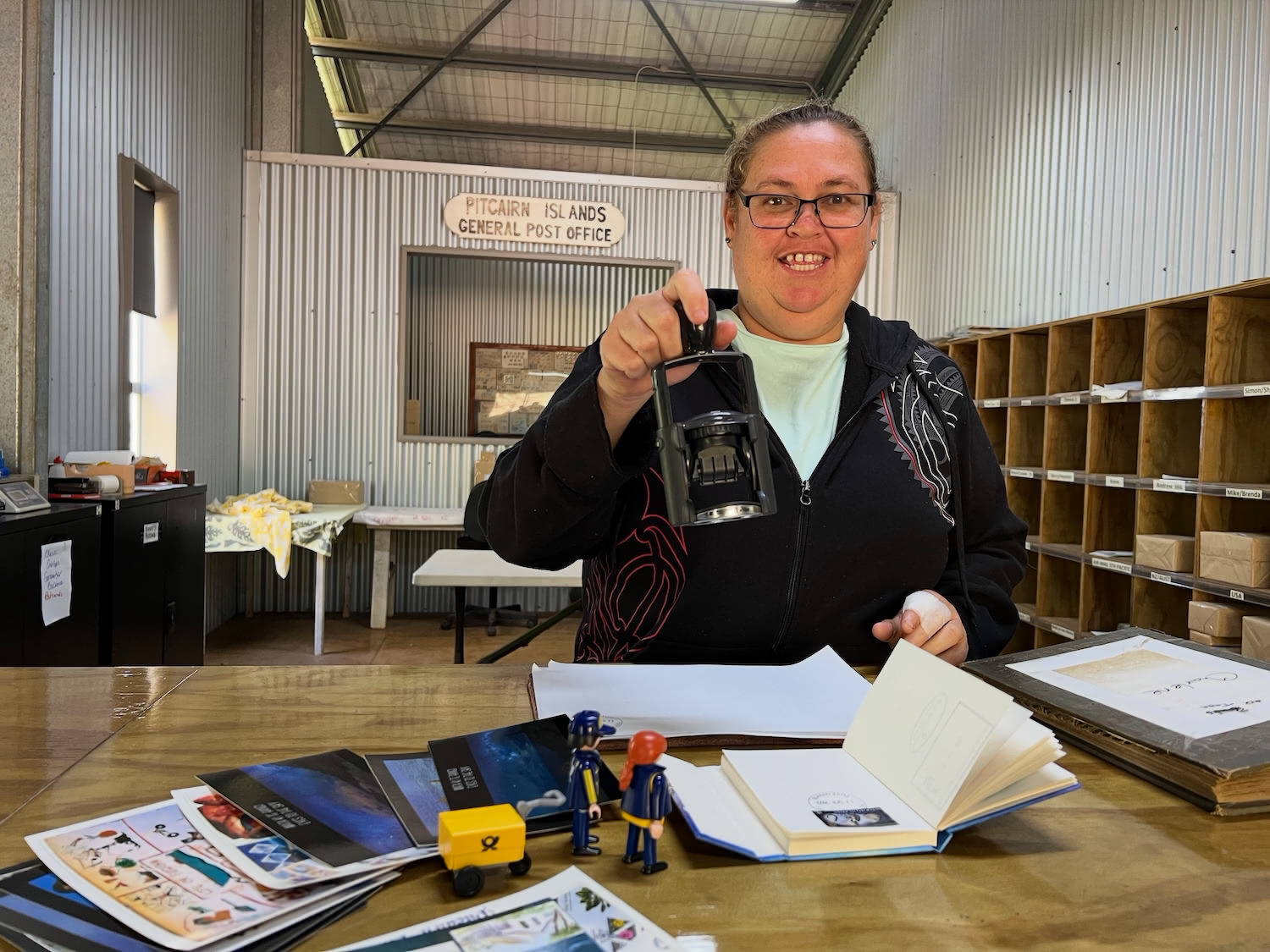
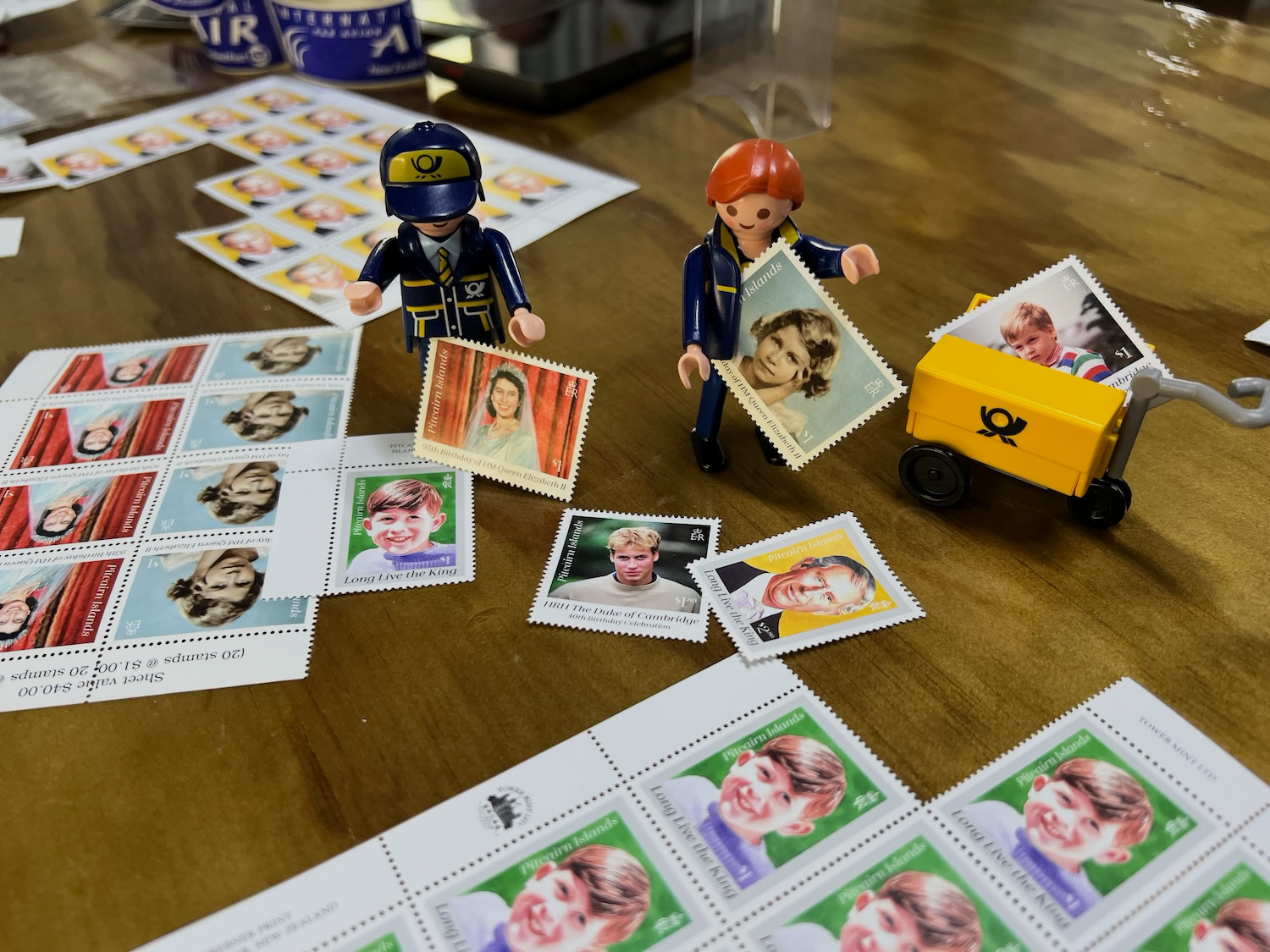
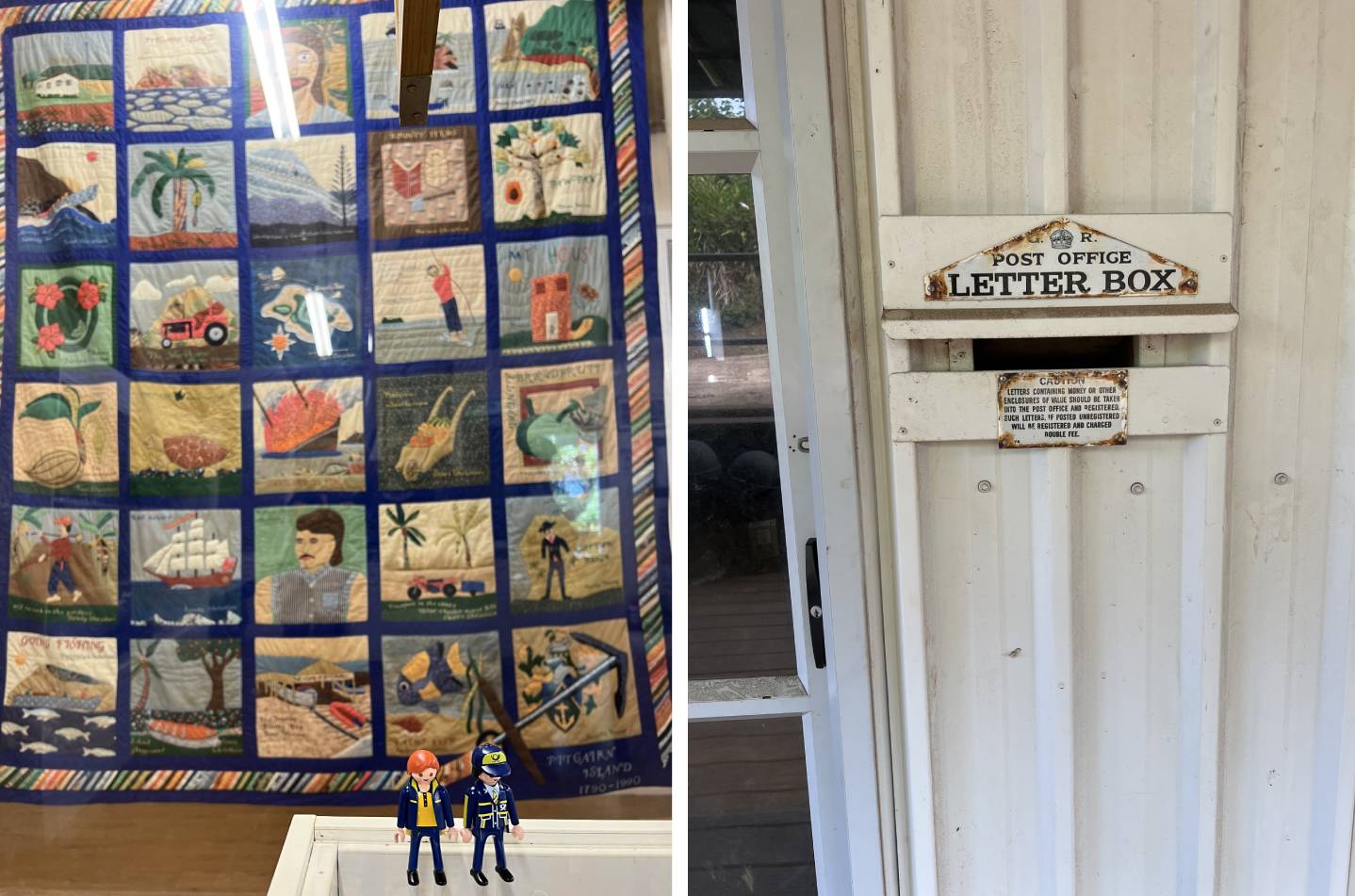
We visited the post office the following morning. For incoming mail, each family has its own shelf, and if someone receives mail (or there’s something else important to report), the walkie-talkie that stays on 24 hours a day starts making noise in every home.
Knowing that just a couple of hours would not be enough for our visit to the post office, Charlene, a post office employee, took the date stamp and came to our homestay. She was also our host’s daughter, and effectively transformed the living room into a pop-up post office!
The same ship we arrived on becomes a mail ship four times a year, transporting mail to and from New Zealand. The departure date was already set, so we knew our postcards would only start travelling five and a half weeks after we left the island. Patience is definitely part of sending postcards from Pitcairn!
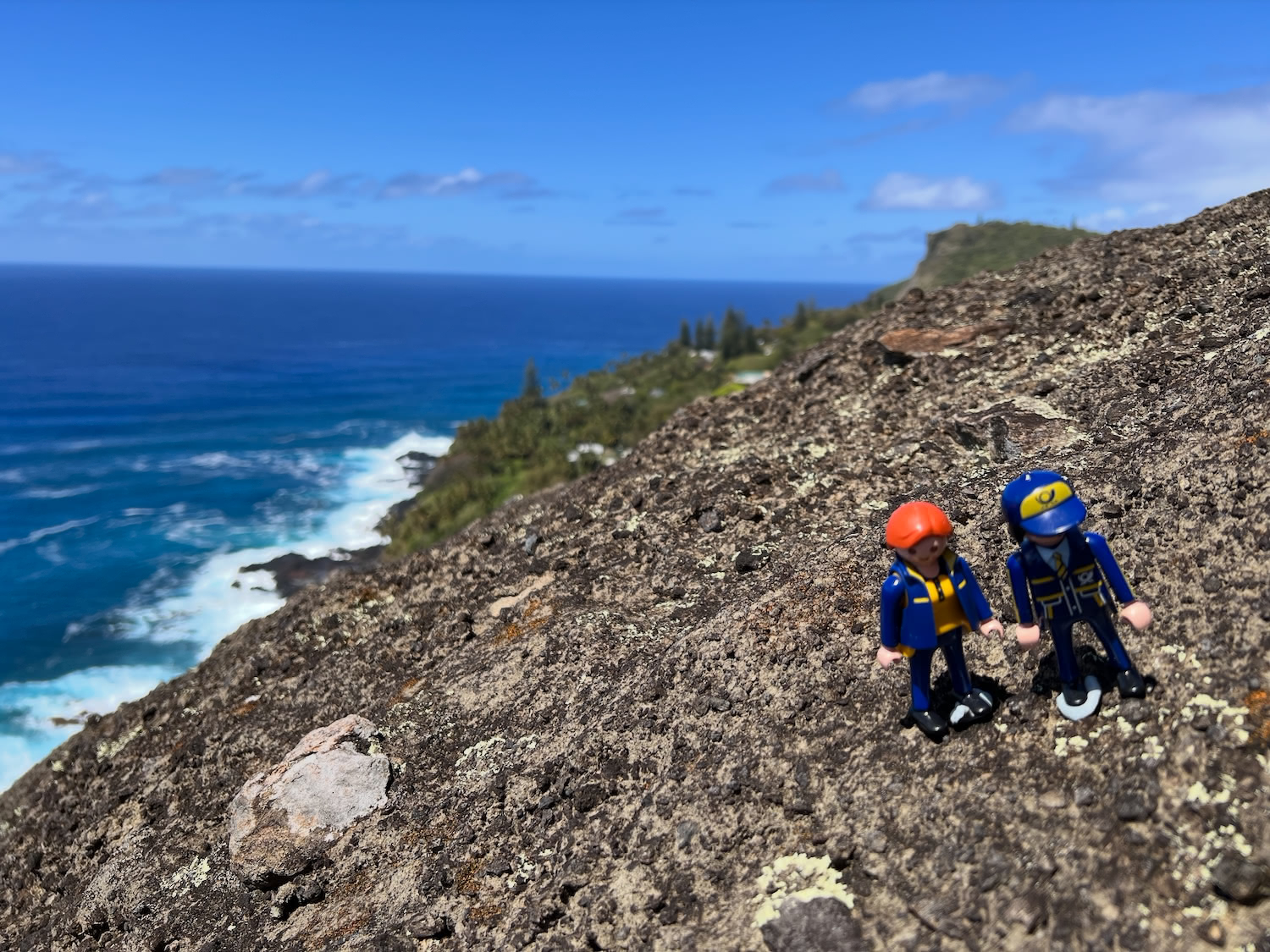
Having arrived in such a special place, we couldn’t just sit in our rooms. With the help of our host and the local police officer (whom we had already met on the ship), we managed to visit several important places: the museum, the church, the island’s highest point (Pawala Valley Ridge, at 347 metres), Christian’s Cave, and Bounty Bay. Seeing the places connected to the Bounty’s story made the history we’d been reading about feel much more real!
And then it was time to say goodbye. The entire village came to see us off once again. The same crew awaited us, but thankfully, the return journey was almost windless!
With that, our journey was nearly complete. We flew from Mangareva to Tahiti, and from there to New Zealand, then continued through Singapore and Istanbul before finally arriving back in Europe. Curiosity paid off this time!
And what an adventure it was! A huge thank you to Maret and Andry for taking the Little Mail Carriers along on this incredible journey across the Pacific, and to all the friendly postal workers and islanders who welcomed them along the way. We’ve loved discovering these faraway places through their photos and stories, especially all the little details of how mail works in such remote corners of the world. From tiny island post offices to living rooms transformed into postal counters… it was quite a trip!